
Baby Bees: Where Are They?

You see honey bees buzzing around flowers and flying in and out of the hive—but where are all the baby bees? You never see tiny versions of adult honey bees because their growing-up happens inside the hive. By the time a young honey bee leaves her wax cell, she is already a full-sized adult. But, she has some maturing to do before leaving the nest.

Let’s take a look inside the hive and learn some of the most interesting facts about bees. Including, how a tiny white bee egg becomes a hard-working adult bee.
So, What Does a Baby Bee Look Like?
If you imagine a baby bee as a tiny version of an adult—complete with fuzzy stripes, little wings and miniature legs—you may be surprised. Baby honey bees don’t look like adult bees at all.
Inside the hive, developing young are called brood. For the sake of our discussion, I am including bee eggs too, though beekeepers sometimes refer to eggs separately from bee brood.
Honey bees undergo complete metamorphosis, passing through four stages: egg, larva, pupa and adult. During the larval stage, a baby bee looks more like a tiny white grub than the fuzzy insect we recognize visiting flowers.
This is why you don’t see miniature bees buzzing around outside the hive. By the time a honey bee emerges from her cell, she has reached the adult stage.

Where Baby Bees Live?
Baby honey bees are found in the brood nest—the area of the hive where the queen lays eggs and young bees are raised.
The brood nest is usually located near the center of the hive where the colony can maintain the warm, stable conditions developing bees need.
Thousands of individual wax cells provide a protected place for young bees to grow.
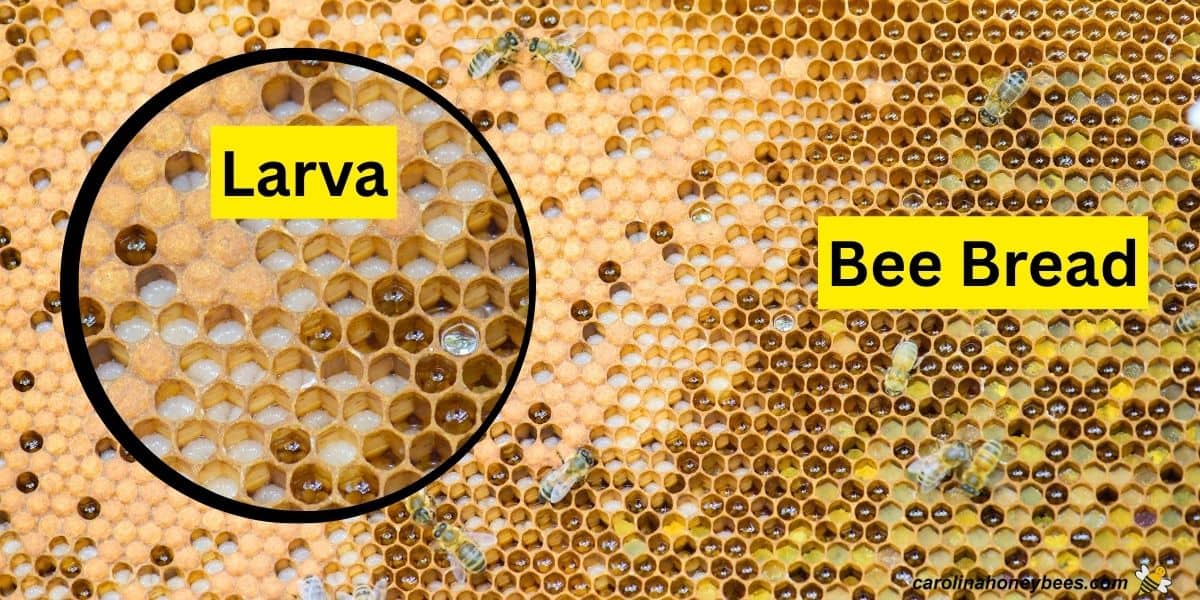
If you could look closely inside these cells, you might see tiny eggs standing upright or pearly-white larvae curled in the bottom. Older brood is hidden from view beneath wax cappings.
Worker bees called nurse bees are responsible for the care taking place here. They tend the developing brood and provide food for the growing larvae.
In fact, it is not uncommon for new beekeepers to email me and say – something is wrong, I have white worms in my hive! No, its okay those are developing bees.
Open and Capped Brood
Not all baby bees are easy to see. Eggs and young larvae are found in open brood cells, where nurse bees can reach them to provide food and care.
As the larvae grow, they eventually reach a stage when feeding is complete. Worker bees seal the cells with a wax capping, creating what beekeepers call capped brood.
Hidden beneath those cappings, the developing bees continue their transformation. Eventually, each one will emerge from its cell as an adult bee.
For beekeepers, a nice pattern of capped brood is a welcome sight. It is a good indication that the colony is raising a new generation of bees.
What Do Baby Bees Eat?
Growing baby bees have big appetites. Nurse bees make many trips to each brood cell, providing the developing larvae with the food they need.
Pollen plays an important role in this process. Fermented pollen – bee bread is stored in the hive. Nurse bees consume this as a protein source that helps them produce food for developing young.
The exact diet varies depending on the age and type of bee. For example, larvae destined to become queens receive a special diet rich in royal jelly.
Thankfully, the nurse bees handle all the meal planning. Baby bees have only one job at this point—eat and grow.

Emerging as Adults
After completing development inside a capped cell, the young honey bee chews through the wax capping and emerges. But, the bee that crawls out is not a baby—she is a full-sized adult.
Newly emerged worker bees may look a little different at first. They are called “callow bees”. They are often lighter in color and a bit fuzzy, with a soft appearance compared to older members of the colony.
These young adults don’t head straight for the flowers. During their first weeks of life, worker bees perform many jobs inside the hive.
They clean cells, care for brood, produce wax and help with other colony tasks.
Later, they begin making trips outside the hive and eventually become foragers. So, by the time you see a honey bee visiting your flowers, she has already spent quite a bit of her life growing up—and working—inside the hive.
Honey bees do not live very long. They has a lot to do in their short life span – all for the good of the colony.
Do Baby Bees Sting?
Of course, eggs, larvae and pupae—can not sting. They are still developing inside their brood cells and do not have the functioning body parts of an adult bee. Who has ever seen an egg with a stinger?
So, if you are wondering whether those little white larvae in the brood comb can sting you—the answer is no. They are much more interested in their next meal!
Once a female worker emerges from her cell, she is an adult and has a stinger. Newly emerged workers spend their early days performing duties inside the hive rather than defending the colony or flying outside.
However, in a short time, their stinger will harden and they will be more than capable of giving you a tap.

FAQs
During the immature stages, yes. Honey bee larvae start out very small and grow rapidly inside their cells. However, you won’t see miniature versions of adult honey bees flying around. By the time a bee emerges from her cell, she is a full-sized adult.
It depends on the type of honey bee. Queens, workers and drones develop at different rates. A worker bee takes about 21 days to develop from egg to emerging adult.
No. Eggs, larvae and pupae remain inside their cells and can not fly. Once a honey bee emerges from her cell as an adult, her wings are fully developed, though young workers normally spend time performing jobs inside the hive before becoming foragers.
A Final Word
You may never spot a baby bee buzzing among the flowers, but now you know why. By the time they join the busy world outside the hive, they are all grown up and ready to get to work.
Is it true that young bees eho make yhrir first glight, fly backwards?
No, not to the best of my knowledge.