
How to Make Black Walnut Salve
Making black walnut salve is a simple way to put fresh green walnut hulls to use in a traditional herbal skincare preparation. Green walnut hulls have been used for generations and are valued for their natural astringent properties. In this tutorial, I’ll show you how to gather and prepare green walnut hulls, make an infused oil, and combine it with beeswax to create your own homemade salve.
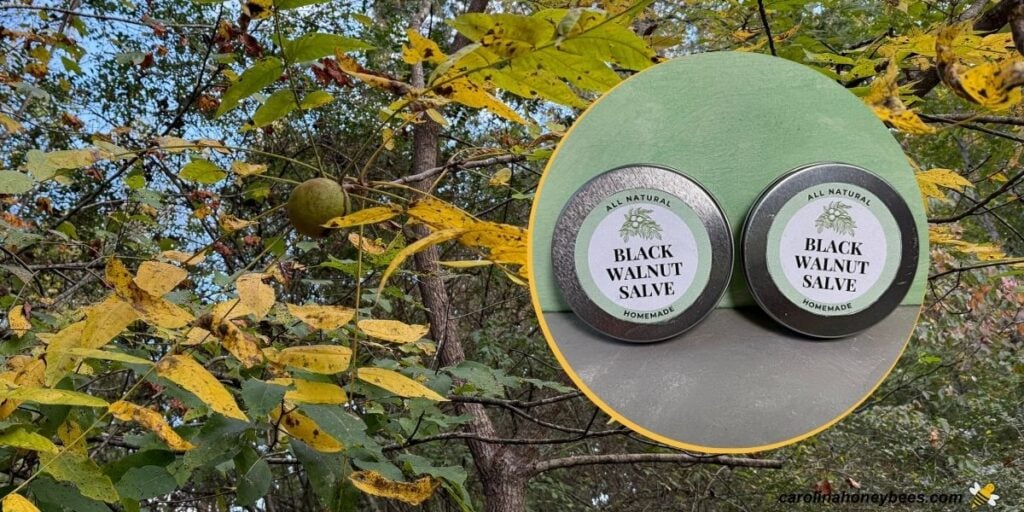
These homemade potions can often be useful for minor skin issues – don’t be afraid to try them. Raw beeswax is a common ingredient in herbal salves & balms; it brings some impressive qualities to the table.
Why Use Green Black Walnut Hulls?
For this project, we are using the fresh green outer hull of the black walnut—not the nut inside.
At this stage, the hulls are rich in the plant compounds that make black walnut useful in herbal preparations.
The hulls are gathered while they are still green and firm, then broken into pieces and infused in oil. This dark infused oil becomes the base for our homemade walnut salve.
What You’ll Need
You don’t need a lot of special equipment for this project. Most of the supplies are simple items you may already have in your kitchen.
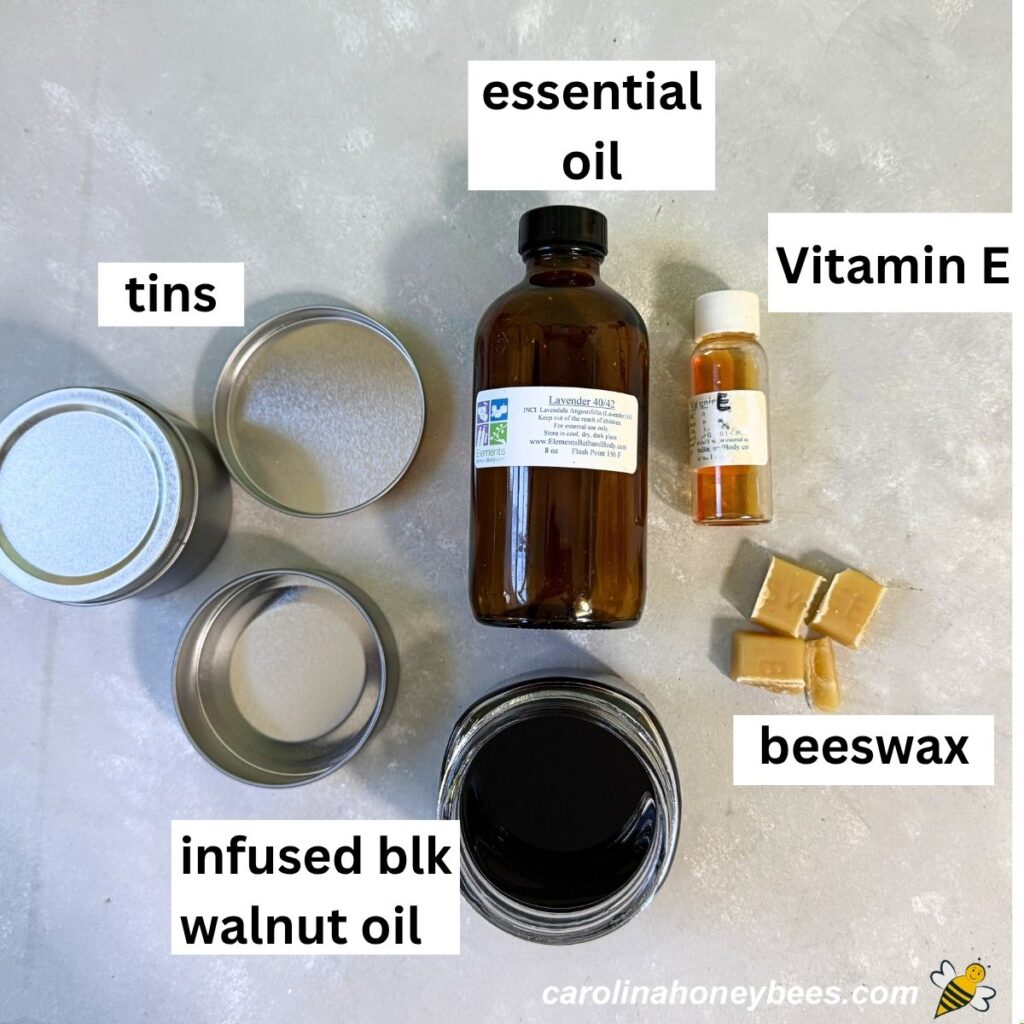
(Vitamin E oil is optional – I like to include it in most salves and balms)
Materials & Supplies
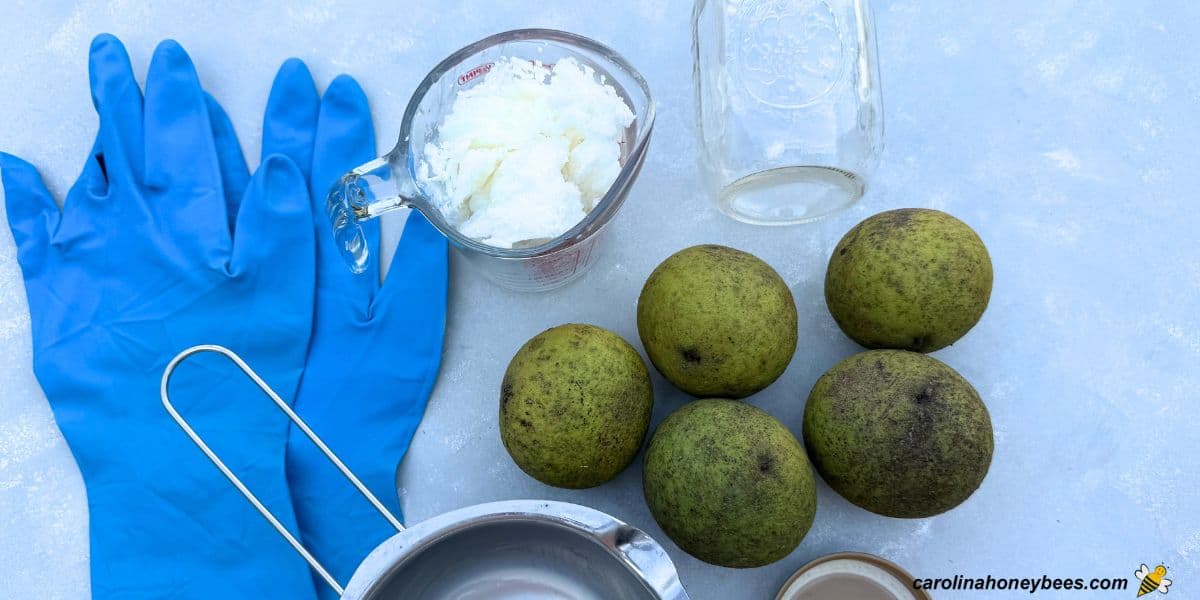
- Fresh green black walnuts
- Coconut oil (or other carrier oil of your choice)
- Pint size glass jar with lid
- Knife or small hammer for breaking apart hulls
- Gloves to protect your hand from staining
- Double boiler or heat-safe container
- Strainer material (cheesecloth, or fine mesh nylon)
- Small tins for storage
Ingredients for the Salve ( in Step 2)
(First you will make the infused oil – then use it to make the salve)
- 3.5 oz (100g) black walnut infused oil
- .5 oz (14g) beeswax
- 15-21 drops of essential oil (optional- lavender, lemon, etc)
Gathering and Preparing Green Walnut Hulls
Black walnuts start dropping from the trees in late summer through early fall.
I usually gather mine in October, when the hulls are still green and firm. You can use ones that have started to darken, but the infused oil will be darker.
Most of what you need will already be on the ground. If you do pick straight from the tree – be sure to wait until the end of the season when they are fully mature.
Unless you are making large batches – you will only need 6-8 walnuts. And yes, if one of these falls on your head, you’ll absolutely feel it —ask me how I know.
Step 1: Make Black Walnut Infused Oil
Before we can make the salve, we need to make an infused oil using the fresh green walnut hulls.
Break the Green Hulls Apart
Before you begin working with the hulls, put on gloves. The green hulls will stain your hands (and anything else they touch) – the color does not wash off easily.
Take each walnut and remove the outer green hull – this is what we want to use. The inside will look yellow or mushy – that is normal. You are only using the hull, not the nut or mushy stuff inside.
Fill a small jar (pint) about halfway with pieces of hull. You don’t have to chop them but I usually break them up a bit.
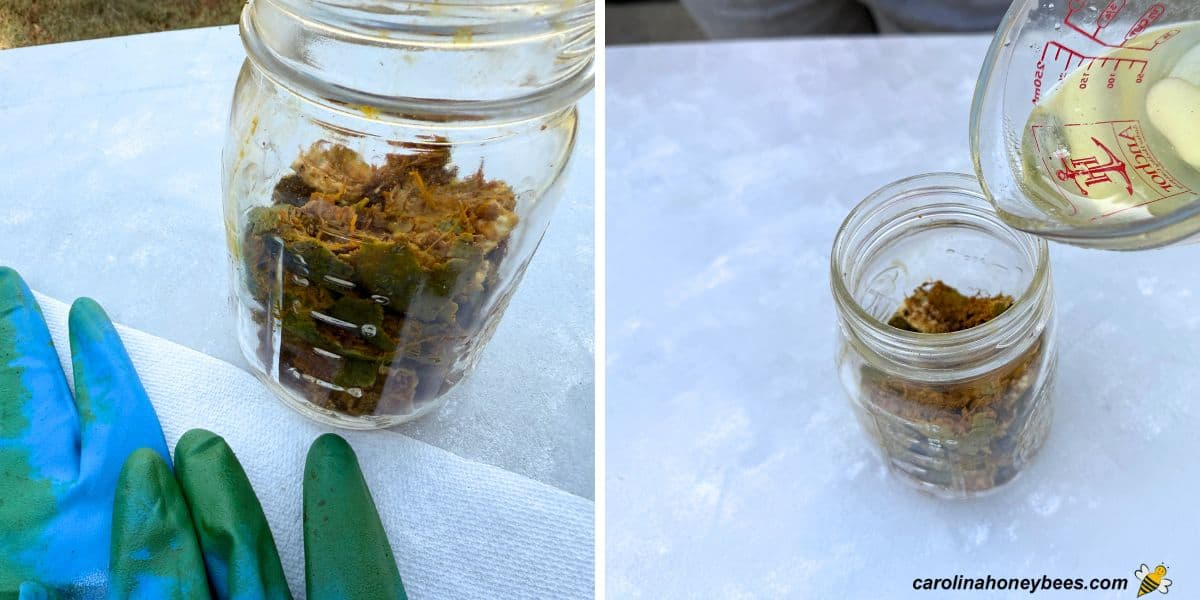
Add the Oil
If you use coconut oil, it may be solid (this is normal when room temperatures are cool). No worries – gently warm the oil to liquid form.
Pour the oil over the hulls – make sure they are fully covered and the jar is almost full.
Warm the Mixture
Place the uncovered jar in a pot of warm water (like a DIY double boiler). Keep the heat low – no boiling or bubbling.
Let the oil and hulls infuse for 2-3 hours.

Strain the Infused Oil
Once the infusion time has passed, remove the jar from the water. Use a filter material (like cheesecloth) and a rubber band to separate the oil from the solids.
Transfer the finished oil to a clean jar (with lid) and discard the hulls. Now you have a rich herbal oil ready to make your own black walnut salve.
I use a similar process for several diy products – including those in my Homemade Skin Care recipes posts.
Step 2 – Turn the Infused Oil into Salve
Now that your infused oil is ready, it is time to turn it into a salve. The process is simple and only takes a few minutes.
Full instructions and ingredients at the bottom of this post. Here is a quick overview of the process.
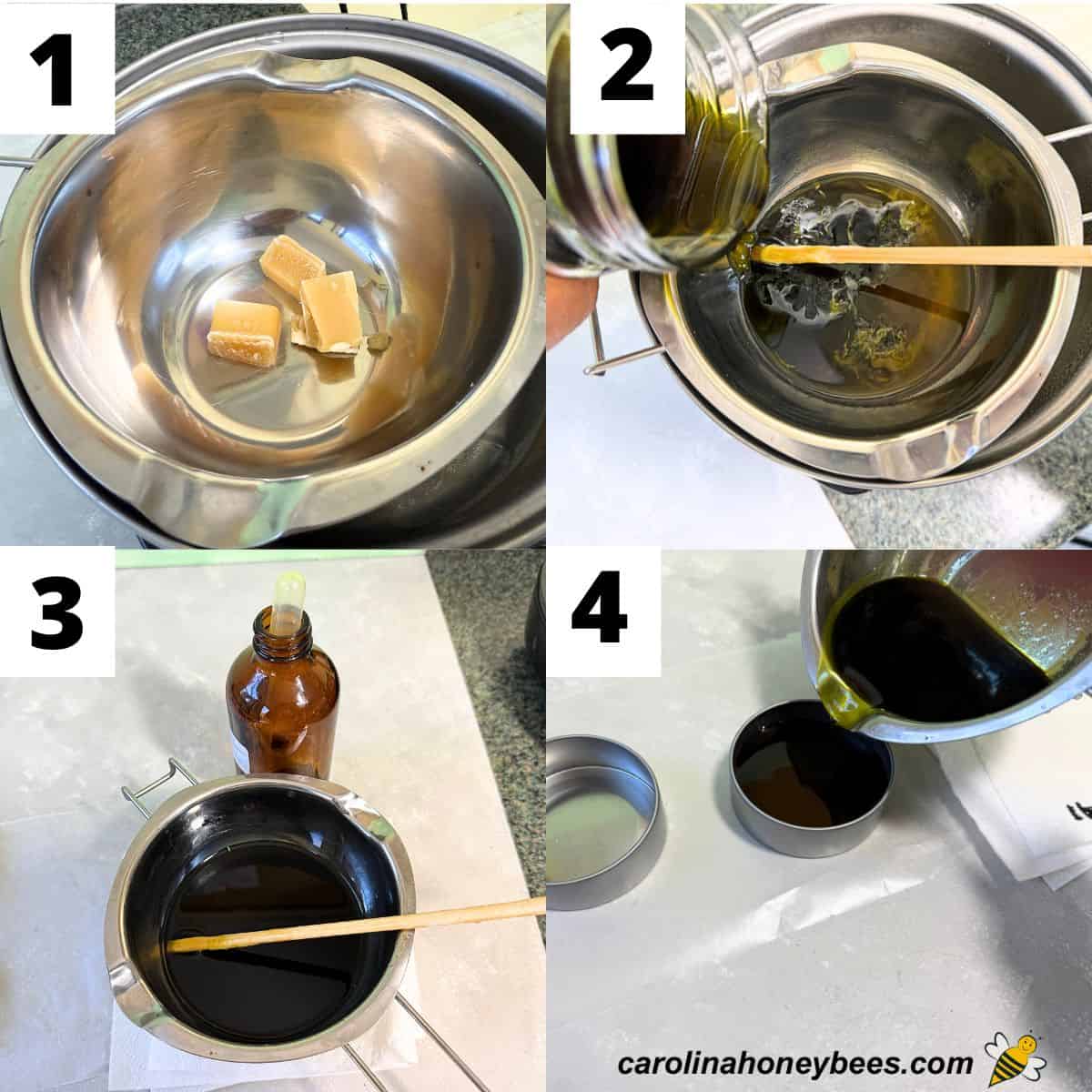
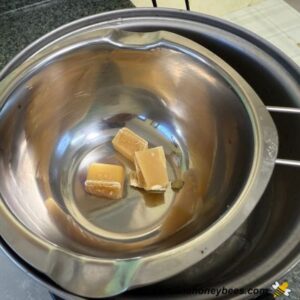
1. Measure and Melt the beeswax
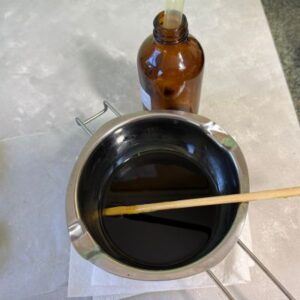
Measure 0.5 ounces (14 grams) of beeswax and place in a double boiler or heat-safe pour pot and melt it slowly over low heat.
You can melt beeswax in the microwave, but I don’t recommend it — the double boiler method is safer and helps preserve the natural qualities of both the beeswax and oil.
2. Add the Infused Oil
Once the wax is fully melted, pour in 3.5 oz (100g) black walnut infused oil and stir until the mixture is completely blended. Keep the heat low and avoid boiling.
3. Add Optional Ingredients
Remove the mixture from heat and stir in your chosen essential oils, if using. The amount listed in the recipe card below is a guide — use less for a subtle scent or a bit more for stronger aroma, but don’t overdo it.
You can also skip EO entirely if you prefer a scent-free salve. This is also the step where I often add a few drops of Vitamin E oil – but it is not required.
4. Pour into Containers
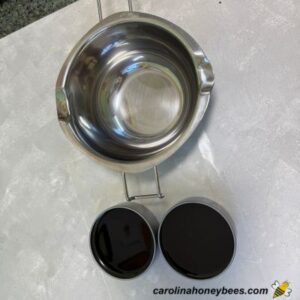
While still warm and liquid, pour the salve into tins or small jars. Metal tins work well and make the salve easy to apply later. Leave the containers undisturbed until the salve has cooled and hardened completely.
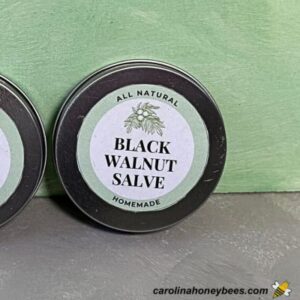
Label the container with the date and name — your future self will thank you.
How to Store and Use Your Salve
Homemade black walnut salve will keep for up to 1 year when stored properly. Keep it in a cool, dark place with the lid tightly closed.
If you notice any change in smell, texture, or see signs of mold, it’s time to make a fresh batch.
Since this is an oil-and-wax salve (no water added), it’s naturally shelf-stable, but heat and sunlight will shorten its lifespan. A small tin kept in a bathroom cabinet, herbal kit, or bedside drawer is ideal.
As with any new homemade skin care product, test a small amount on a patch of skin first and wait to see how your skin reacts before using it more widely.
If you have a known allergy to walnuts or tree nuts, this may not be a suitable product for you.
FAQs
Yes, dried black walnut hulls can be used to make infused oil. However, I prefer using fresh green hulls when they are available.
Yes. While I often use coconut oil, you can use another skin-friendly carrier oil such as olive oil. Keep in mind that changing the oil may affect the texture and feel of the finished salve.
The amount of beeswax controls the firmness. If you prefer a softer salve, use a little less beeswax. For a firmer salve, add a little more.
Fresh black walnut hulls definitely stain your hands, but I have not found the finished salve to stain my skin. Still, it is a good idea to test a small amount first, especially before using it near clothing or other fabrics that might stain.
A Final Word
There’s something incredibly satisfying about turning foraged green walnuts into a homemade herbal salve.
Whether you add it to your herbal first-aid kit, gift it to a fellow natural-living friend, or simply enjoy the process of making it, this project connects you right back to traditional, hands-on folk medicine.

Get the Buzz on Beekeeping & Life with Bees..
Subscribe to my weekly newsletter. Practical beekeeping guidance, along with honey uses, beeswax projects, and bee-friendly gardening ideas.
Additional Resources:
**Natural remedies are still powerful. This recipe is shared for entertainment purposes and promises no health care benefits.

Black Walnut Salve Recipe
This post may contain affiliate links. As an Amazon Associate, I earn from qualifying purchases.
Read my Disclosure.Supplies
- 3.5 oz black walnut infused oil (100g)
- 0.5 oz beeswax (14g)
- 21 drops essential oils (optional)
- 4 drops vitamine e oil (optional)
Instructions
- Add beeswax to a double boiler and heat on low until fully melted.

- Pour in the black walnut infused oil and stir gently until completely combined.
- Remove from heat and add essential oils, if using. Stir again.
- Pour the warm salve mixture into tins or small jars.
- Let cool and solidify completely before adding lids and labels.
You have mentioned about astringent properties and used for skin from long time ago, would you be able to give examples for what skin conditions has it been used and what does it help with?
Many thanks
Elvina
It certainly is used for several skin conditions. However, as a beekeeper – not a doctor – I shy away from medicinal claims as much as possible. I would look for a page on Natural Apothecary for some good ideas.
Will this stain my skin?
The salve should not – it never has mine. But, wear gloves when working with the hulls.
This is fascinating! I had no idea that black walnuts had healing properties. I’m really eager to try making some from the tree in my backyard.
🙂
This is a great idea and just in time for gift-giving season, thank you Charlotte!
🙂
Easy natural salve