
Bee House : What to Look For

When I hear the term “bee house”, the image I bring to mind probably differs from yours. My beekeeper brain immediately pictures wooden bee boxes stacked in my yard. But the truth is, a bee house can look very different depending on which bees are moving in. In this guide, we explore some of the most common structures used by bees and how to choose the right one for your yard.
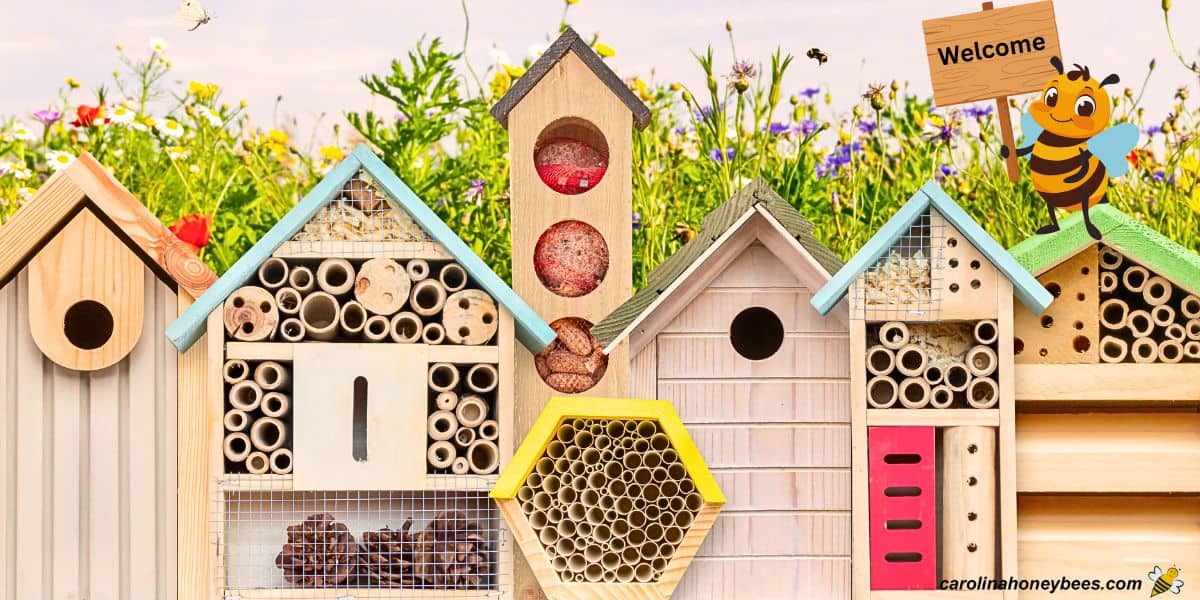
While they are all members of the insect family, people often confuse the identification of a bee nest and a wasp nest. Yet even among the bee family, you will find a surprising amount of variation. Not all bees live in hives. Not all bees make honey. And not all bee houses look alike.
What Is a Bee House?
As we hinted, “bee house” is a general term that can refer to several different structures. How you define it often depends more on your personal experience than on a strict dictionary definition.
Basically, a bee house is any structure where a bee — or a group of bees — lives and raises brood (young).
It provides shelter from weather, protection from predators, and a safe place for the next generation to develop.
For some bees, that shelter must be large enough to hold thousands of workers along with stored food.
For others, a narrow tunnel in a piece of wood is more than sufficient. The purpose remains the same, even if the design varies greatly.
Understanding those differences makes it much easier to decide what kind of bee house you actually need.
Bee Houses for Honey Bees
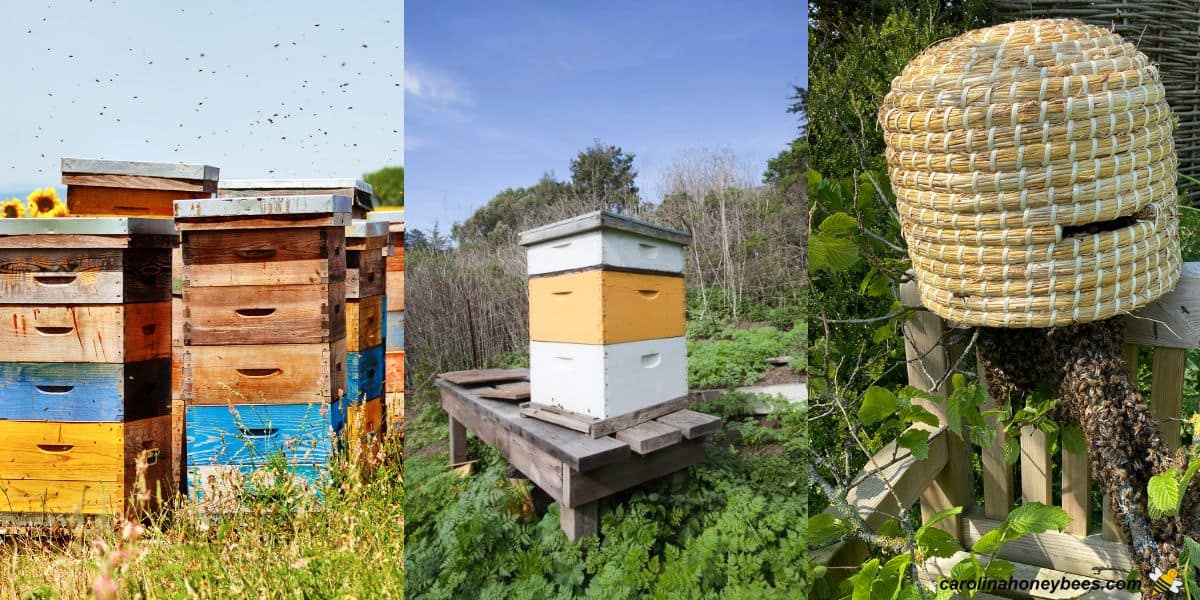
In nature, I am always thrilled to find a colony of honey bees that has taken up residence in a hollow tree. That tree cavity is their natural bee house — protected, enclosed, and large enough for comb building and food storage.
However, most honey bees today live in man-made beehives managed by a beekeeper. These modern bee houses are designed not only to shelter the colony but also to allow inspections and proper care.
You will see different types of beehives depending on beekeeper preference and sometimes geographical region.
The most common style is the Langstroth hive. Its removable frames make hive inspections quicker and easier — for both the beekeeper and the bees.
Instead of tearing apart comb, frames can be lifted out individually to check brood, food stores, and overall colony health.
This box-style home is designed to hold thousands of honey bees during peak season and provide space for a winter supply of food.
Another man-made bee house from history is the straw bee skep. Still used in some parts of the world, skeps are mostly considered a traditional part of beekeeping history rather than a practical choice for modern management.
They certainly look charming, but they do not allow for easy inspections or responsible hive care.
When it comes to honey bees, a bee house is much more than a simple shelter — it is a carefully designed system for colony living.
Mason & Solitary Bee Hotels
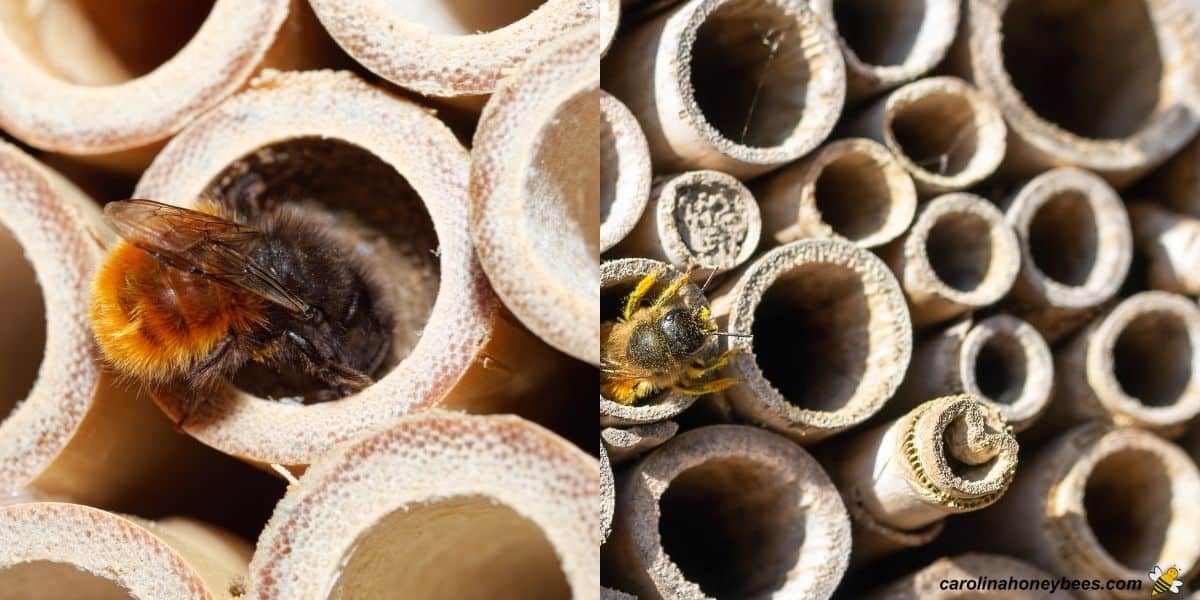
When most people think of a bee house, they are referring to the small structures used by mason bees and other solitary bees. These are often called bee hotels.
A collection of hollow stems, bamboo pieces, paper tubes, or holes drilled into a solid block of untreated wood provides nesting space for these bees.
Unlike honey bees, solitary bees do not live in large colonies. Each female builds and provisions her own nest.
Different varieties of mason bees and leafcutter bees will make use of this type of bee hotel in your garden.
The female gathers pollen, lays an egg in a tunnel, seals off the chamber, and repeats the process until the space is filled.
These homes are small because solitary bees do not need space for honey storage or thousands of workers. There is no colony to maintain and no surplus honey to protect.
If you install a bee hotel and no one moves in, don’t be discouraged. The local population may be low, or natural nesting sites may already be plentiful. Hollow plant stems, cracks in wood, and old insect tunnels often serve the same purpose.
Many solitary bees do not overwinter as adults. When cold weather arrives, the adult bees die as winter begins.
However, sealed chambers inside the nesting tubes protect developing young until spring warmth signals the next generation to emerge.
DIY Bee House Ideas
A favorite project for school children (and plenty of adults) is making a simple bee house for the yard.
For example, a tin can bee house is always a popular choice. It uses materials you likely already have on hand and is easy for younger children to assemble with a little supervision.
Beyond the fun craft aspect, building a bee house creates a valuable teaching opportunity. It opens the door to discussions about pollinators, beneficial insects, and how different bee species live very different lives.
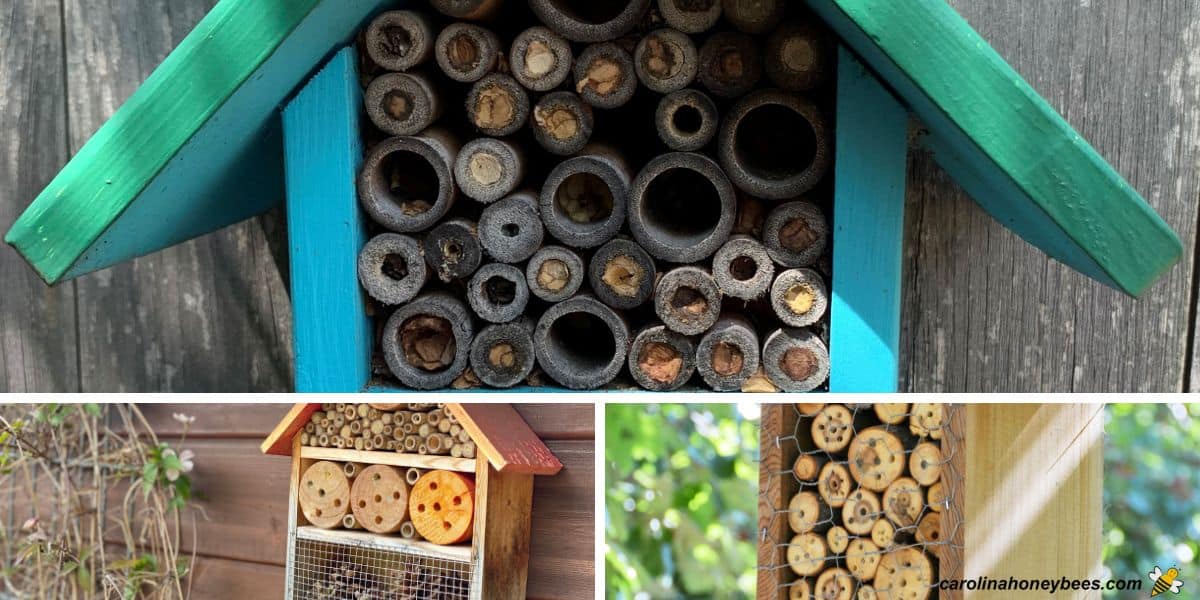
If you prefer an even simpler design, a solid block of untreated wood with holes drilled into it can provide excellent bee habitat.
Drill holes of varying diameters and depths to attract a range of species. Be sure the interior of the holes is smooth, as rough edges can damage delicate wings.
Keep the design basic and avoid treated lumber or painted interiors. The goal is to mimic natural nesting spaces, not create something decorative but unusable.
Where to Place It
The best location for your bee house depends largely on the type of bee you are trying to attract. Of course, always consider the basics:
- Protection from strong wind and harsh weather
- Placement away from areas where chemicals or pesticides are sprayed
- Secure mounting so the structure does not sway or fall
Solitary bee houses should also receive morning sun and be sheltered from heavy rain. Mount them firmly to a post, fence, or building rather than hanging them loosely from a branch. Stability helps protect developing brood inside the tunnels.
Honey Bee Hives Need:
- A sunny location, especially morning sun
- Good airflow
- Protection from strong prevailing winds
- Adequate space around the hive for safe management
However, keeping honey bees is far more involved than simply providing a shelter. Before investing in hive equipment, take time to learn how to start beekeeping.
Responsible beekeeping involves inspections, seasonal care, and ongoing attention. That commitment is only fair to both you and the bees.
This post may contain affiliate links. Carolina Honeybees earns a tiny commission when you shop from our links. See our privacy policy for terms.
How to Buy a Solitary Bee House
Mason bees are the most popular visitor to the various styles of bee houses that we see for sale. However, some conservation groups feel that the vast majority of them are not good for bee health.
If you want to add one to your garden – try to choose a model with removeable tubes. This helps keep the nest cleaner and healthier over the years.
WHITEHORSE Premium Cedar Bee House – 6” Long Replaceable Tubes – Perfect for Mason Beekeeping

FAQs
No. Honey bees live in large colonies and require full-sized hive equipment designed for brood rearing and honey storage. Bee hotels are used by solitary bees such as mason bees and leafcutter bees.
Untreated wood is one of the best materials for most bee houses. Honey bee hives are typically made from wood boxes with frames, while solitary bee houses use drilled wood blocks, bamboo, or paper tubes.
A bee house does not automatically attract large numbers of bees, but it can provide nesting space for species already in your area.
Finally
The phrase “bee house” sounds simple, but it covers a wide range of structures. Whether you desire a full-sized managed hive or a small garden bee hotel, the design depends entirely on your goal.
Some bee houses support large colonies and honey production. Others provide simple nesting spaces for hardworking pollinators. Once you understand which bees you hope to attract, choosing the right bee house becomes much easier.
More Resources