
How to Make Ginger-Infused Honey
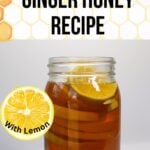
Ginger-infused honey is a simple way to combine the natural sweetness of honey with the spicy flavor of fresh ginger. Add a little lemon (my favorite addition), and you have a delicious mixture to stir into warm tea or enjoy when your throat feels scratchy. This easy ginger honey recipe requires only a few ingredients and a little patience. Let me show you how easy it is to make.

Thankfully, honey from bees can be used in my ways including easy honey recipes for meals. But, it doesn’t just shine in the kitchen. Knowing how to make a few home remedies is a good skill to have.
What is Ginger-infused Honey?
Ginger-infused honey is simply honey that has been flavored with fresh ginger root.
As the ginger sits in the honey, its warm, spicy flavor blends with the natural sweetness of the honey. I like to add a few slices of fresh lemon for an extra burst of citrus flavor.
Unlike fermented ginger honey, the goal here is to infuse the honey with flavor—not encourage fermentation.
Both methods are similar, but the preparation and storage instructions are a little different.
Why People Love Ginger and Honey
Honey and ginger have been used for centuries in traditional home remedies. Honey is well known for its ability to soothe a scratchy throat and calm occasional coughs.
Ginger is often used to help settle an upset stomach and may provide relief from mild nausea.
Combining these two ingredients creates a sweet and spicy mixture that is especially comforting when added to warm tea. Of course, you don’t have to feel under the weather to enjoy it!

Ingredients Needed
You do not need many items for this simple recipe. Even though I have not listed it, you do need a little patience and prep time. Make it ahead of time so you always have some on hand.
- honey
- ginger
- lemon (optional)
- pint jar and lid
You will need a jar. I choose the pint size jar which will hold approximately 22 ounces (net weight) of honey. Honey is sold and measured by weight not volume.
Honey
The flavor or variety (type) of honey does not really matter. Choose a mild flavor – avoid dark strong honey such as buckwheat.
I always recommend raw honey over regular honey. It has not been over processed and still maintains all its natural goodness.
If the label on honey does not say raw – it probably is not. If you already have some on hand and are not sure about whether or not it is raw – don’t fret. You can use it and it will work.
If your honey has crystallized, don’t worry! Crystallization is a natural process and doesn’t mean your honey has gone bad. You can gently warm the honey to return it to a liquid state before using it in this recipe.
Ginger Root
Now for the spicy partner in this recipe. Ginger alone – is a popular home remedy for relief from coughs and sore throats.
Fresh ginger root is easily found in the produce (or fresh spices) section of your local supermarket. The small root systems remind me of daylily tubers.
Choose a root that is plump and not dried out. Avoid any roots that have soft spots or are very wrinkled.
(You can actually grow your own ginger. I did it this Summer and it was an awesome experience. I used a nice tuber from the organic section of the grocery. It grew all Summer in a large pot and I harvested the tubers in Fall.)
Lemons
This is optional but I always add lemon to my ginger infused honey recipes. They are an excellent source of antioxidants like Vitamin C.
Lemon juice is a traditional ingredient in hot teas. However, due to the strong taste – lemons are not commonly ingested alone! You only need 1 for this tea/tonic but make sure it is a plump juicy one.
How to Make Ginger-Infused Honey (Step by Step)

1. Prepare the Ingredients: Wash and dry the ginger root and lemon. Then, peel the ginger and slice into thin pieces using a sharp knife or mandolin slicer. Likewise, slice the lemon trying to retain as much juice as possible.
2. Fill the jar: Place lemon and ginger slices into a clean dry glass jar. Make sure you have a good lid.
3. Mix Gently: Slowly pour raw honey (that you have slightly warmed) over the ingredients inside until the jar is full. Then place the lid on and sit in a warm location.
The jar with additives is then allowed to sit for a period (time varies – at least several days in a sunny/warm spot.)
After that time, strain the solids out and you are left with infused honey. I suggest you do remove the solids as that helps prevent spoiling.
A Note About Refrigeration
When you add lemons (that contain water) to honey (that has a water content) – there is always a possibility for fermentation. In this recipe, we do not want that.
Some resources say to place your recipe in the refrigerator for the “steeping” period. I’m sure that is the correct process but I never have.
I make sure my honey is ripe – honey with the proper water content, and have never had a problem. The choice is yours.
Tips for Best Flavor
Some people choose to warm honey in the microwave. I don’t recommend that because we do not know if any of the nutrients are damaged. But, do not over-heat the honey – slightly warm. Other tips-
- Slice the ginger as thin as possible (I sometimes fail to do that but it gives the best flavor).
- Use high quality raw honey.
- Don’t forget to give the jar a gentle shade or flip every day.
- For a stronger kick – let the infusion continue for a longer time.
Creative Ways to Use It
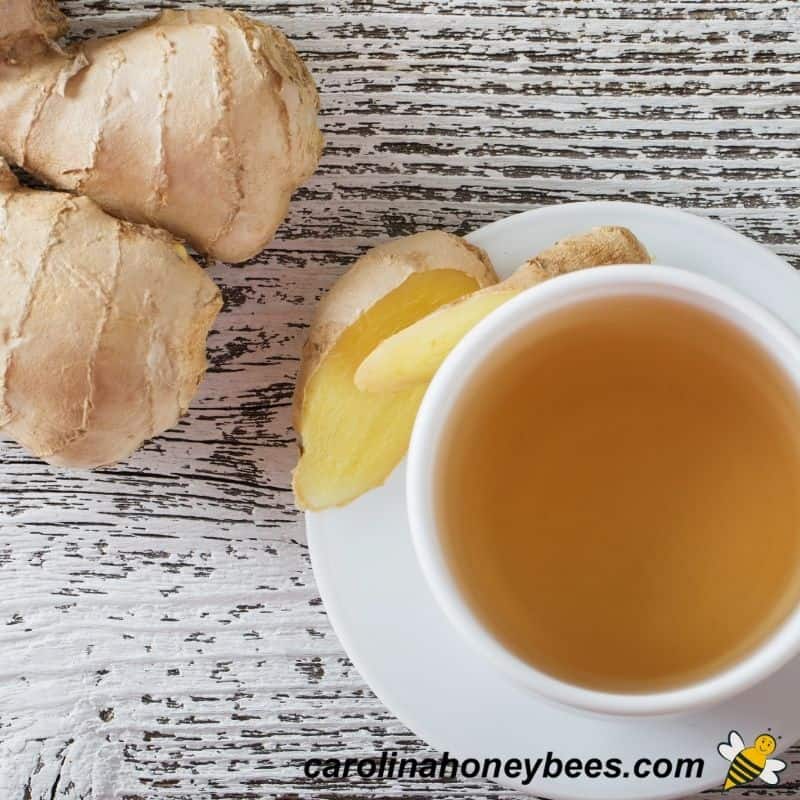
Once this process is complete, you have a jar of concentrated goodness. Don’t drink it straight – that might be a bit too much for most of us. Some people use it as a substitute for spiced honey in hot toddies.
My favorite way to use it is to create a hot tea with honey. Add 2 large tablespoons to a cup of regular hot tea.
Of course, you can dilute your tonic with plain hot water if you prefer. You can add more if you wish to make a stronger brew. Choose the amount that your taste buds prefer.
Ginger, honey and lemon produce a soothing tonic for minor cold or flu symptoms. I even use it when my sinuses are causing my throat to be sore.
It feels very good on a tender throat. This tea certainly helps me feel better while I am waiting on my system to kick the germs. And honestly, it is soothing even in the Spring when my allergies are acting up!
How to Store
After a couple of days, you store your infusion mix in the refrigerator to prolong freshness. While pure honey will last indefinitely, infused may not.
This is especially true when we are adding any liquid or juices. And, we are using wet ingredients such as lemons, the honey will pull the moisture from the lemon slices.
Ginger-Infused Honey vs. Fermented Ginger Honey
Ginger-infused honey and fermented ginger honey are very similar, but there are a few important differences. Both combine the sweetness of honey with the spicy flavor of ginger, but the process and finished results are not quite the same.
Ginger-infused honey is made by allowing fresh or dried ginger to steep in honey, transferring its flavor into the mixture. The goal is simply to flavor the honey without encouraging fermentation.
Fermented ginger honey, on the other hand, relies on the natural yeasts and bacteria found on fresh ginger to cause fermentation. Over time, the honey becomes thinner and may develop small bubbles as the microorganisms produce gas and acids.
The biggest difference is that one method focuses on flavor, while the other encourages fermentation.
Keep in mind that fresh ginger can introduce enough moisture to cause unintended fermentation, even when you’re only making an infusion. Fermentation doesn’t automatically mean the mixture is probiotic or safe to consume.
FAQs
es, you can use dried ginger slices or even ginger powder in honey. Fresh ginger gives a brighter, spicier flavor, while dried ginger tends to be earthier and more subtle. If using dried, let it infuse a little longer for the best taste.
Honey on its own doesn’t spoil, but when you add fresh ingredients like ginger, there’s a small chance of fermentation or mold if the jar isn’t kept clean or sealed properly. Signs it’s gone bad include bubbling, foaming, or a sour smell. If that happens—toss it and start fresh.
Not always! If the skin is thin and smooth, just wash the root well and slice it. Peeling is only necessary if the skin looks tough or woody. Leaving the peel on saves time and still gives great flavor.
More Ways to Enjoy Honey
Every home should have a jar in the pantry, because there are so many ways to use honey. Need more honey ideas?
The next time your family needs a soothing hot drink, try this popular recipe for honey and cinnamon-great for relief from cold symptoms.
For a great companion product – make some natural vapor rub too!
And remember, honey and lemon can team up to make another great drink for Summer. Try some homemade lemonade sweetened with honey.
If you enjoy making this natural infusion for better health, try this recipe for homemade honey cough drops.
Did you like this recipe? Please leave a 5 star (⭐⭐⭐⭐⭐) rating in the recipe card below. And, don’t forget to follow me on Facebook and Pinterest.
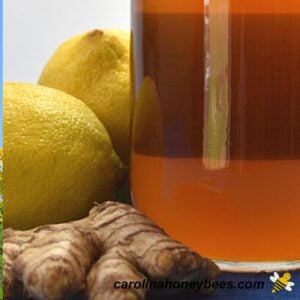
Ginger Infused Honey Recipe (with Lemon)
This post may contain affiliate links. As an Amazon Associate, I earn from qualifying purchases.
Read my disclosure.Equipment
- double boiler set
Ingredients
- 22 ounces Honey
- 1 piece lemon
- 1 inch ginger root
Instructions
- Peel a 1 inch piece of raw ginger. Using a knife, slice the ginger. It is okay to make the slices thin or thicker – either way you prefer.
- Slice one whole lemon in equal width slices. Add the lemon slices and ginger pieces to the glass jar in layers.
- Using a double boiler, heat your honey to a temp of 115 degrees F. We do not normally recommend heating raw honey because it may destroy some of the nutrients. However, for infusing – warm honey works best.
- Pour the warmed honey mixture into the jar containing the lemon slices and ginger pieces. Now, add a lid to the jar and invert the jar several times to mix well.Leave the sealed jar sitting in a warm place for several days. You may want to periodically invert the jar to mix but that is optional. After a few days, your infused honey is ready to use.
Hi Charlotte. Question, due to some unexpected circumstances, my ginger honey has sat on the counter from October 31st. Yesterday I noted a bit of foam on the top and a bit of a fermented smell when I opened it. I dumped the solids out and now have a jar of honey with foam. Did I ruin this batch? Also, can you give me an idea of what the ph should be on this after it sits and does its stuff? I have seen posts about making garlic infused honey that has a person doing a ph test to ensure that it is below a point that botulism wouldn’t be a problem. I shot for a ph of 4 or so on my garlic ginger. Thanks for your reply. Don from Lugoff
Hmm, a fermented smell doesn’t sound good. The issue is that honey absorbs moisture from anything you put into it. So if the honey you start with is just at the safe level for water content – and the garlic or other items you add are extra juicy…. it could raise that water level too high. I honestly don’t know the answer about ph and botulism. I would likely start over and make sure the garlic is not too fresh.