
Make a Bee Propolis Tincture
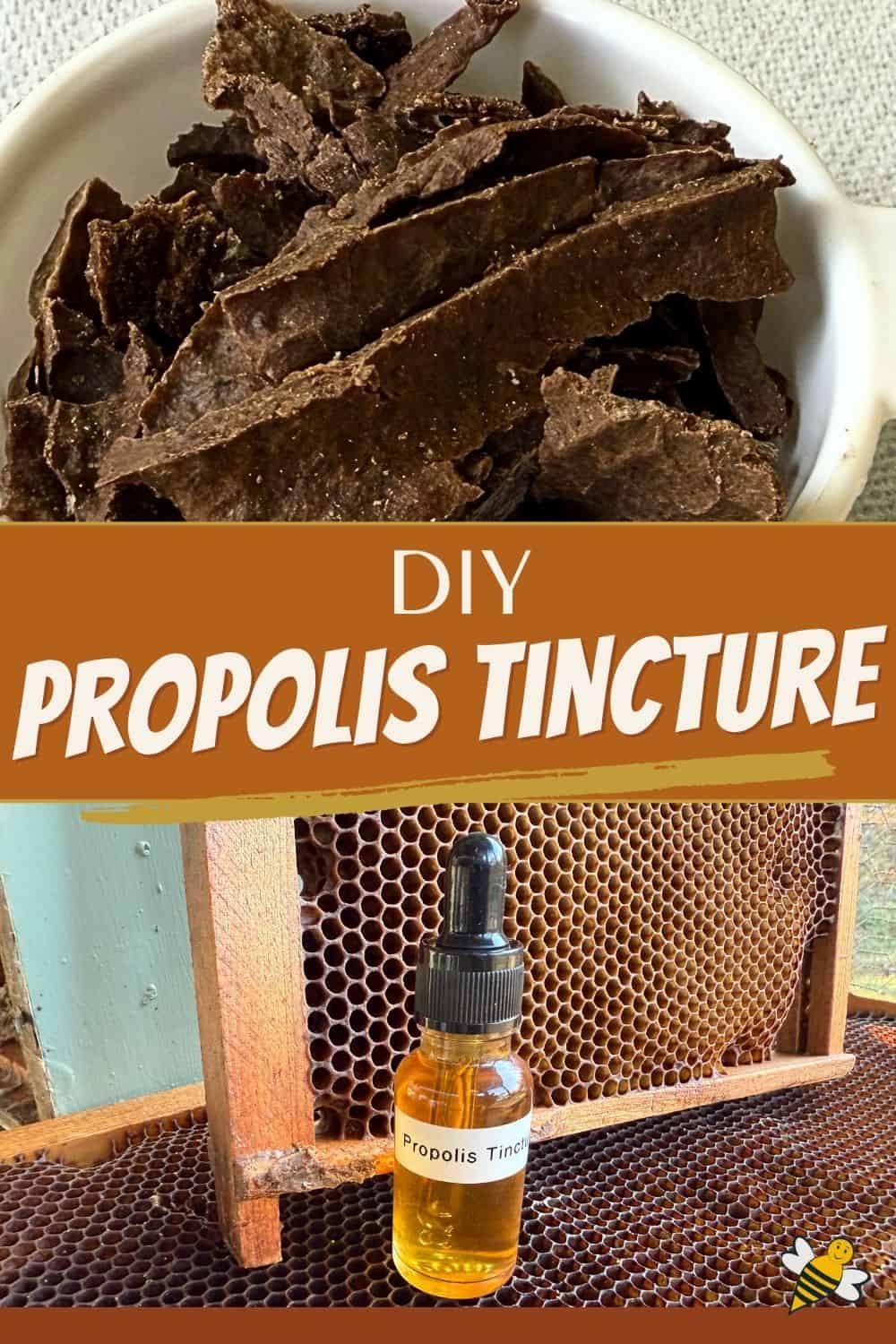
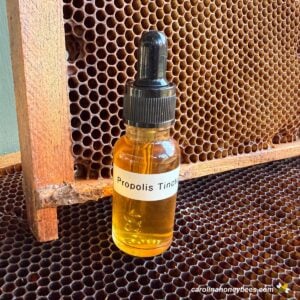
If you are lucky enough to have some raw bee propolis on hand, making a propolis tincture is surprisingly simple. A tincture is an alcohol-based extract that can draw beneficial compounds out of plant or resin materials. In this guide, you’ll learn how to turn propolis into a traditional 1:9 tincture using just a few basic supplies.
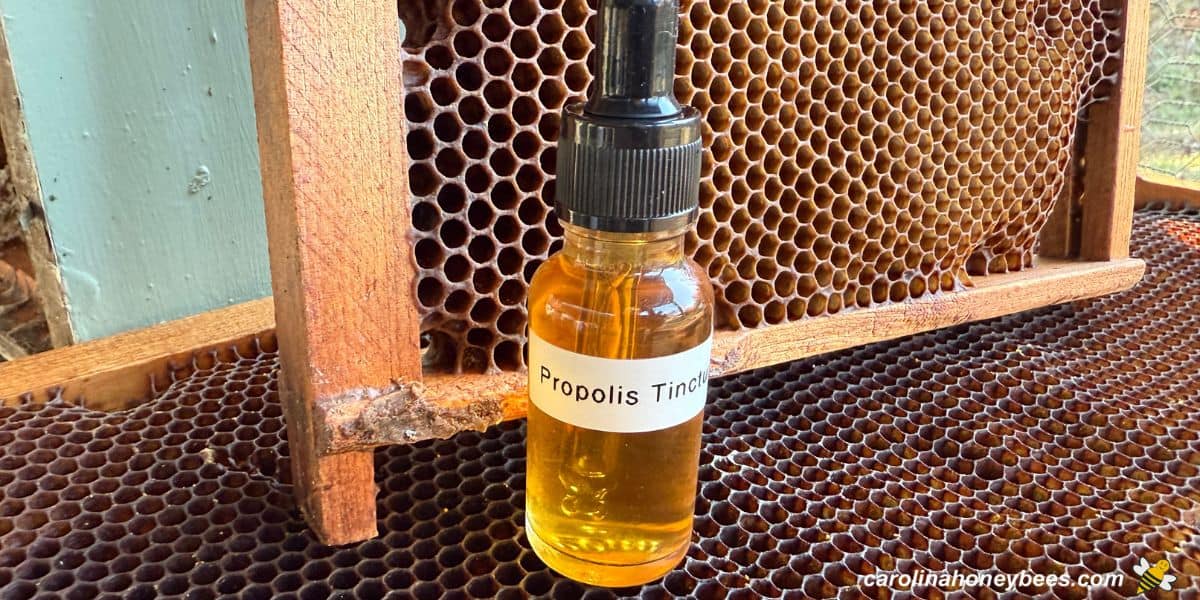
We beekeepers are not the only ones that can appreciate the many products from the bee hive. Honey bees are remarkable chemists and they create these substances without a college degree!
Why Make a Tincture with Propolis?
So, what’s so special about propolis? Bee propolis is a sticky resin that honey bees make by collecting sap from tree buds and plants.
After adding their own sections to it, propolis is used to seal cracks in the hive, strengthen their comb and it help steralize the internal environment.
Because it plays such an important role in colony health, humans have used propolis in traditional remedies for generations. One of the most common practices is to prepare tinctures to extract beneficial compounds.
Many people believe propolis tinctures may offer wellness benefits, but I do not know of any scientific studies confirming the effectives. Proceed as an experience to learn how it is used – I make no medical claims.

Materials Needed
- raw propolis
- 90-95 proof grain alcohol (Everclear is commonly used)
- kitchen scale
- small jar with tight-fitting lid
- cheese cloth or fine strainer
- dropper bottle for storage
- a bit of patience
Note: Do NOT use rubbing alcohol. It is not safe for internal use.
Preparing the Propolis
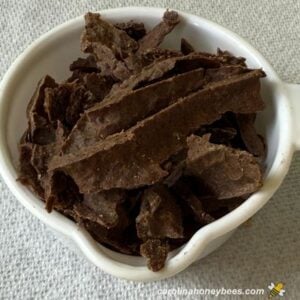
If you’re a beekeeper (like me), you may already have some propolis harvested from your equipment. If you want to learn how – see my article on harvesting propolis from a beehive.
Propolis traps can be purchased and used to collect it in larger amounts. Also, you can purchase dried propolis online.
Store raw propolis in a sealed container until you’re ready to use it. For long-term storage, I often keep mine in the freezer, it stays fresh and the cold temperature makes it easier to break it into pieces.
Choose the Right Alcohol
For tincture making, grain alcohol works best because it does a good job of efficiently extracting the resinous compounds.
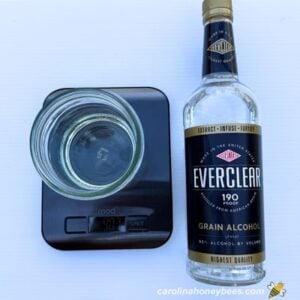
Everclear (90-95 proof) is the most popular choice. You can get it at the liquor store (Red Dot).
You can use lower-proof grain alcohol if that’s all you can get. But, avoid anything with additives or flavors. Again: rubbing alcohol is NOT the same thing. It should never be consumed.
**This DIY tutorial is for informational purposes only and should not be considered medical advice. Use at your own descretion.
How to Make a Propolis Tincture (Step by Step)
Most propolis tinctures are made using a 1:9 ration by weight (you will need a kitchen scale). This means you need 1 part propolis to mix with 9 parts alcohol. This produces a traditional 10% tincture.
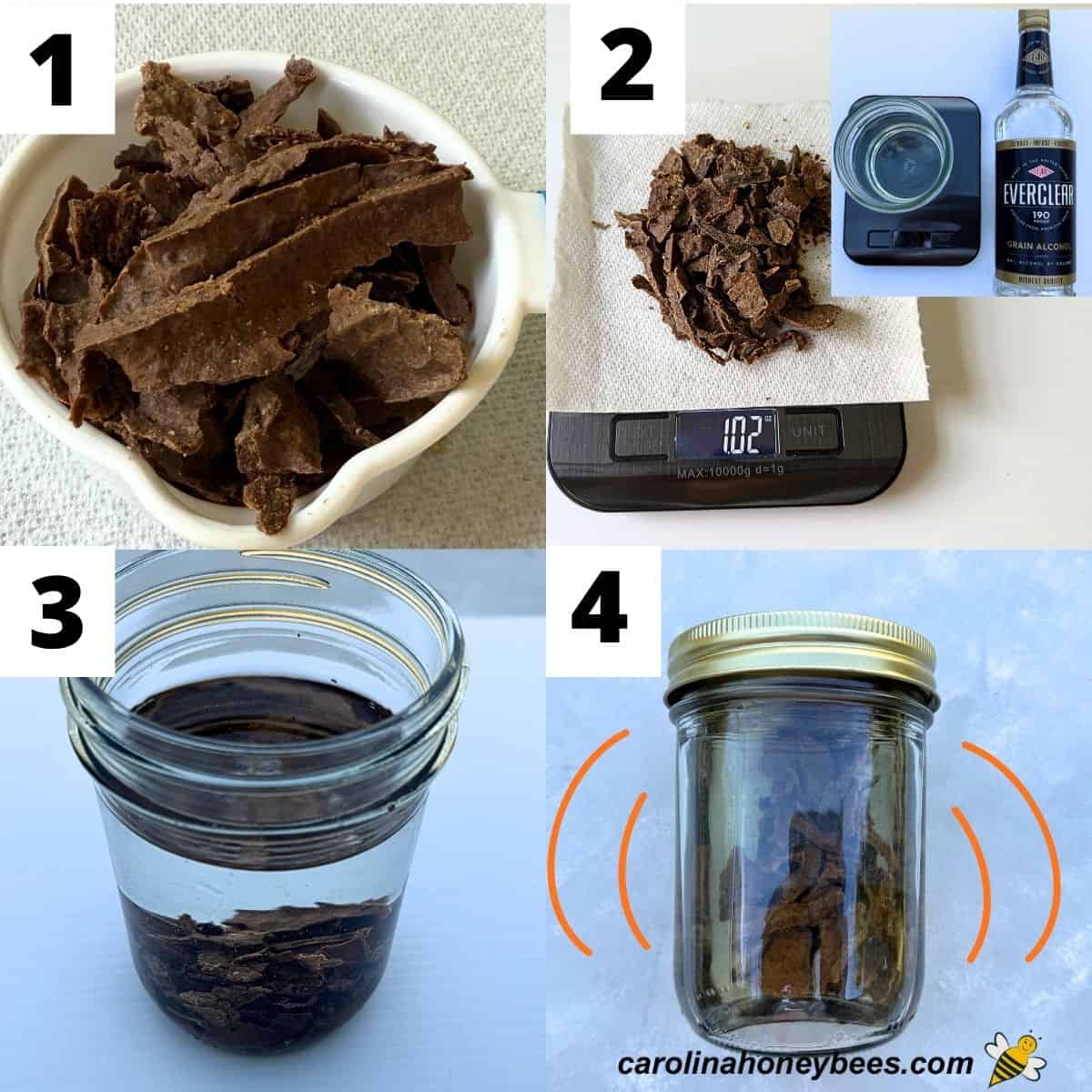
1. Break the propolis into small pieces (optional – but a good idea). Cold propolis shatters easily – another reason the freezer trick works well. But, I never have any problem tearing warm bits apart.
2. Weigh Your Ingredients. Measure the amount of propolis you have by weight using a small scale.
For example, 1 ounce net weight (not volume) is mixed with 9 ounces of alcohol – you can’t use measuring cups. That gives you volume not weight!
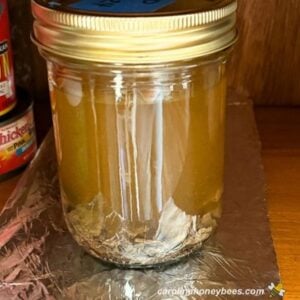
3. Combine in a Jar. Add the propolis pieces and alcohol to a glass jar and seal tightly. Any size jar is fine but for this recipe a wide mouth pint jar works well.
4. Shake Well. I like to give the jar a good shake for a minute or so in the beginnng. Then, store it in a dark cabinet.
5. Shake Daily. This is the patience part.
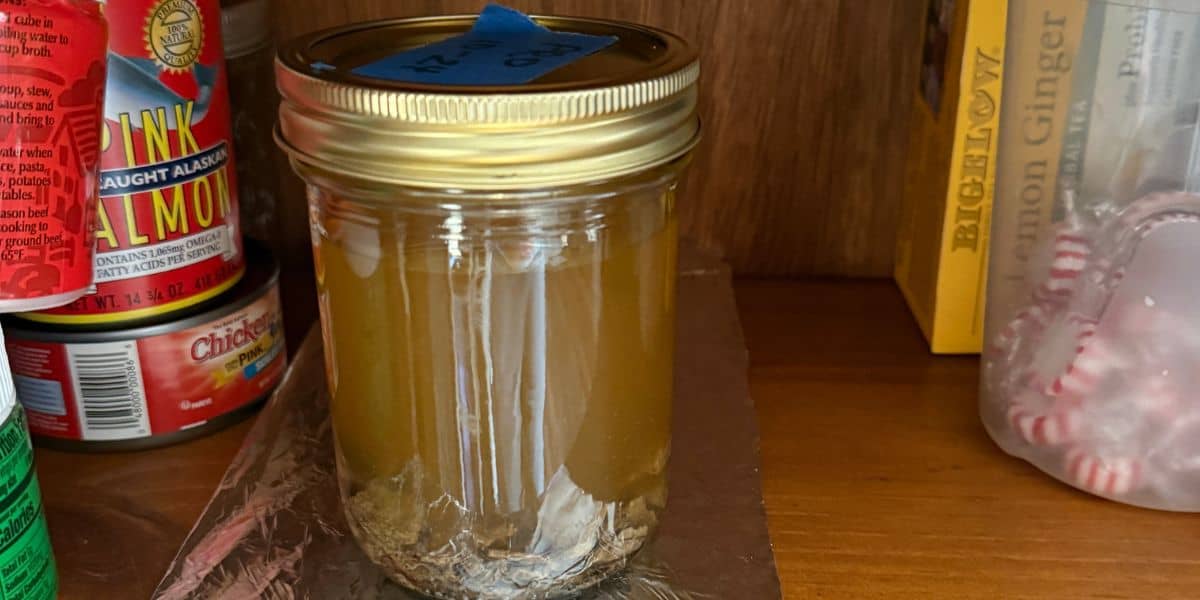
Every day for 2-3 weeks stop by the cabinet and give the jar a couple of good shakes. This helps the resin dissolve – you will notice this as time goes by.
Straining and Bottling
Most (but not all) of the propolis will break down into the alcohol. Any leftovers can be strained out and resused for a weaker batch or discarded.
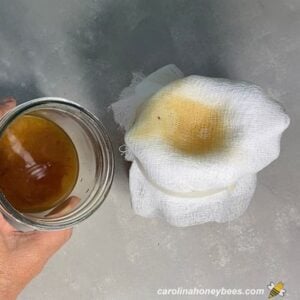
For straining place a clean strainer or piece of cheesecloth over a jar or bowl and slowly pour the mixture through. This should remove any solid bits that are left.

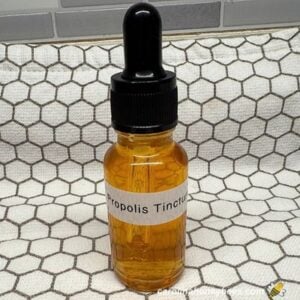
I choose to transfer the filtered liquid to a small glass dropper bottle – for ease of use. A small funnel is handy – not absoutely necessary but may save you a mess to clean up.
Store the finished tincture in a cool, dark place. Properly prepared the tincture can last for many months – up to a year.
How to Use
In traditional use, tinctures are only taken in very small amounts. We are talking – a few drops at a time.
Sometimes a few drops are placed under the tongue – but most prefer to add the propolis tincture to a beverage such as coffee or hot tea.
FAQs
Grain alcohol such as Everclear (90–95 proof) is the most common choice because it extracts the resinous compounds effectively. Lower-proof options can work, but avoid any alcohol with added flavors or rubbing alcohol, which is not safe for consumption.
Most tinctures need 2–3 weeks of steeping time. Shaking the jar daily helps the propolis dissolve more fully and ensures a stronger final extract.
Some people apply tinctures to small areas of skin, but always test a tiny amount first. Everyone’s skin reacts differently, and propolis can stain clothing or surfaces.
Additional Resources:
This post may contain affiliate links. As an Amazon Associate, I earn from qualifying purchases. Please read my disclosure.
DIY Propolis Tincture Recipe Tutorial
This post may contain affiliate links. As an Amazon Associate, I earn from qualifying purchases.
Read my Disclosure.Tools
- 1 dropper bottle (similar) for storage (amber is best)
- 1 cheesecloth (or strainer)
- 1 small glass jar with tight lid
Supplies
- 1 oz bee propolis raw
- 9 oz 90-95 proof alcohol
Instructions
- Break the raw propolis into small pieces. Freezing it first makes it easier to crumble.

- Use a kitchen scale to measure the propolis by weight.
- Weigh out nine times that amount in grain alcohol.
- Add the propolis to a clean glass jar. Pour the measured alcohol over it and seal tightly. Mix vigorously to mix everything together.
- Store the jar in a cool, dark place for 2-3 weeks. Shake it once or twice a day to help the propolis dissolve.
- When steeping is complete, strain the liquid through cheesecloth or a fine filter to remove any debris.
- Bottling – Transfer the filtered tincture to a small bottle or dropper bottle for easy use. A dark colored or amber bottle is best. But, if you don't have that be sure to wrap the bottle in foil or something to protect if from light.


Perfect
Thannk you.