
Bee Safe Weed Killer
If you are a gardener wanting to control weeds and protect pollinators, you are not alone. Is there a weed killer that’s safe for bees? In truth, no herbicide is completely risk free. However, there are some methods of weed control that are much safer for honey bees when used properly. In this guide, you will learn about bee safe weed killer options.
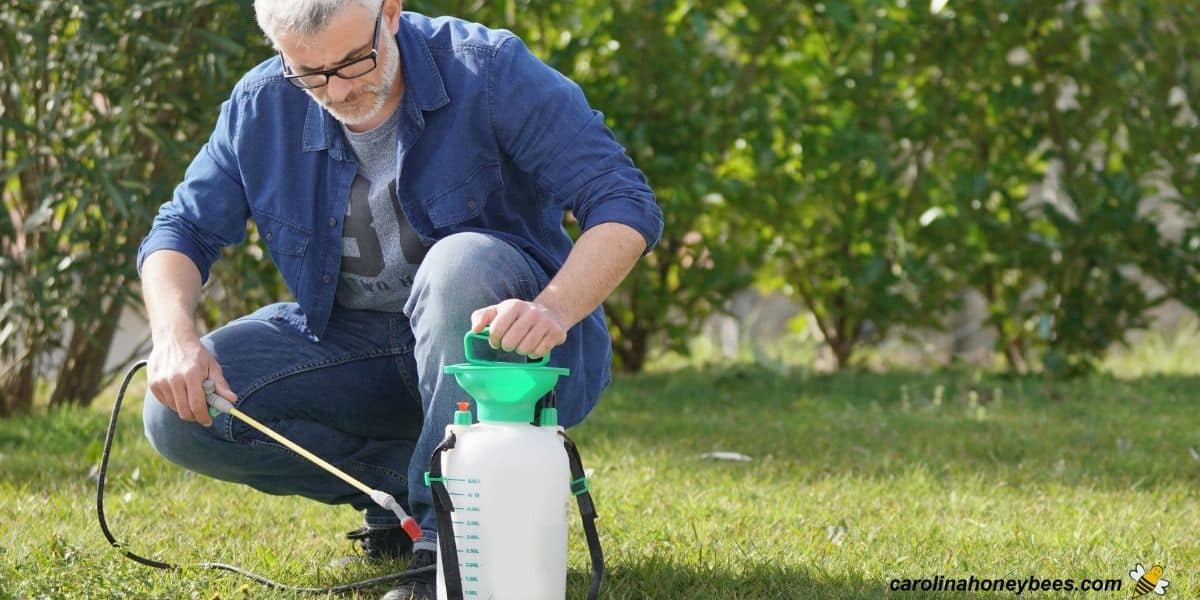
If you are a bit OCD, like me, you may yearn for a tidy bee friendly garden. This is something I always struggle with – the bees would likely prefer I just let the weeds grow.
Is There a Weed Killer Truly Safe for Bees?
In truth, there is no herbicide (weed killer) that is 100% safe for bees under all conditions. The ingredients, application method and timing all determine the final harm to pollinators.
Our goal is reducing exposure – and, of course, using the smallest amount of the least lethal products.
What Makes a Herbicide Dangerous to Bees?
Not all herbicides are equally dangerous to bees. While some folks want to toss them all in the “very bad” box – science does not support this theory.
Bees are at most risk when they are sprayed with the chemical or come in contact with treated blooms or leaves. Keeping this in mind makes choosing a bee friendly herbicide a bit easier – avoid:
- direct contact
- residue on flowers
- drift
Direct Contact
Never spray herbicides on plants where bees are foraging. If you must spray a field, mow away the blooms and then spray the remaining leaves.
You may be harming not only the foraging bees – but also members back in the hive as the contaminated workers return.
Residue on Flowers
Always schedule a spray time when honey bees are likely done for the day. This is another example of using good timing for weed killer application.
Later afternoon – early evening gives the liquids time to dry before bees return. Anytime you can spray leaves and avoid flowers it is important to do so.
Drifting
If you have ever sprayed a vegetation killer in your yard and accidentially got some on your favorite plant – you have experienced drifting.
Windy days may carry spray to nectar plants that are not your target.
This post may contain affiliate links. Carolina Honeybees earns a tiny commission when you shop from our links. See our privacy policy for terms.
Best Bee Safe Weed Killer Options
As a beekeeper, I am always concerned about the use of any chemicals near the hives. Thankfully, we have several options for controlling weeds:
- weeding by hand
- using mulch wisely
- bee friendly weed applications

Manual Weeding (Safest Option)
The most effective 100% bee safe weed killer is to use your two hands and a hoe. This time-honored method of pulling weeds is labor intensive but effective – especially for small garden spaces.
Consider getting a Grandpa’s Weeder – this tool can save many hours of aching back and shoulders.
If you have a larger area, or do not have the physical ability or time to weed their garden by hand – a special propane torch can be used to kill weeds.
Be advised you must handle with care this is the real deal. Someone almost burned down their greenhouse with one (no comment).
Organic/Natural Herbicides (Use with Caution)
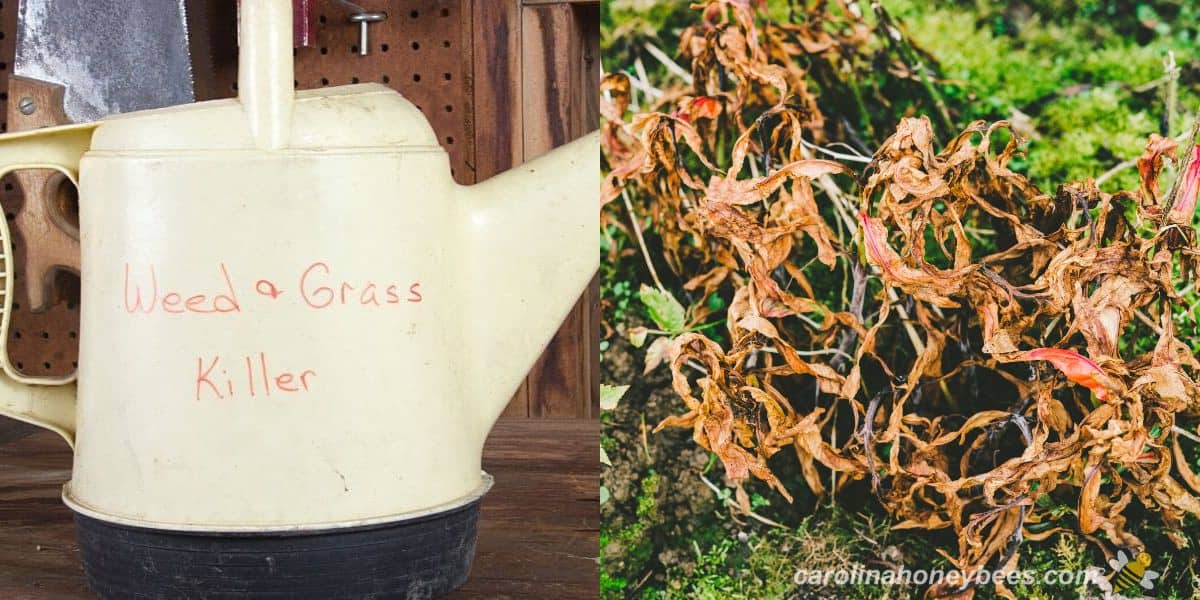
Many gardeners look for organic or natural herbicides as a bee-safe alternative. These products often contain ingredients like citric acid, clove oil or other soap based ingredients.
These types of herbicides are usually contact killers that damage only the plant tissue they touch. They don’t move through the plants system – they don’t kill the root.
Because they break down relatively quickly, they are marketed as a lower-risk option to weed control.
However, “natural” does not mean completely harmless. Avoid spraying directly on bees or blooming flowers. Choose the best application time and consider spot treatment instead of broad spraying of an area.
If you are interested in a homemade option, see my vinegar weed killer recipe here.
Glyphosate-Based Herbidecs (When Used Properly)
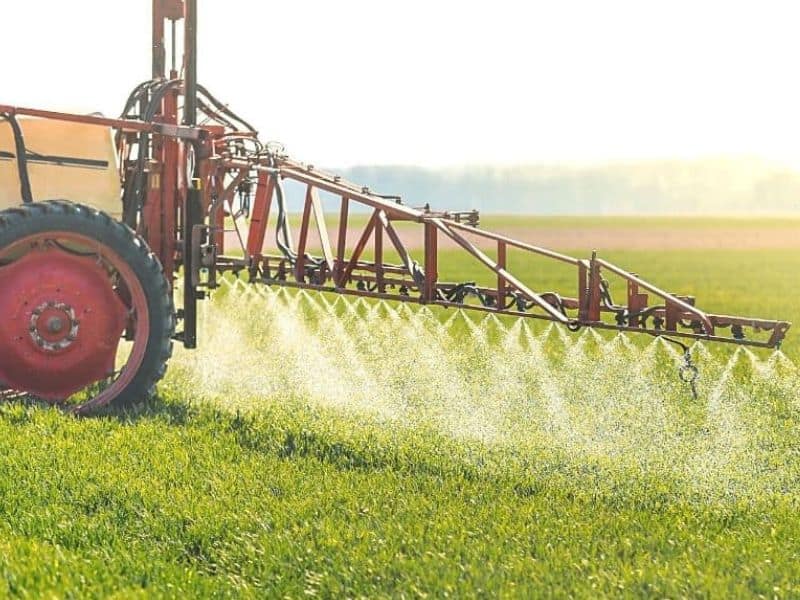
Glyphosate is the common ingredient in several popular weed killers. It is not designed to kill insects. Yet, there is much debate on the risks to bees, other pollinators and even humans when this product is used.
Due to wide-spread use, there are some valid concerns over the effect of this product on our environment. I will not weigh in on this debate as there is no clear cut winner. I would avoid use when possible.
The biggest bee risk (as we know it) is spraying blooming plants. Therefore, always spray after sunset or very early in the morning when bees are not out foraging.
Pre-Emergent Herbicides
Pre-emergent herbicides are applied very early in the season. They prevent weeds before they flower. This means a lower risk to bees because no blooms are present.
Corn gluten is a common form – available in pellets, powder or granules. It is a byproduct from the milling of corn.
While it won’t kill existing weeds, it does a pretty good job of preventing new weed seeds from sprouting.
Most formulations (like this one from Jonathan Green works as fertilizer too). And as always, when using any type of herbicide avoid getting it on desirable vegetation.


Weed Control Methods That Protect Pollinators
Safely controlling weeds in a lawn calls for a different approach. There are several commercial products labeled as bee safe weed killers for lawns.
For example, 2,4-D has been shown to be safe for use in areas with bees. Each manufacturer has a slightly different ingredient profile – read the label carefully before using.
When Is It Safest to Spray Around Bees?
- spray after sunset
- use the least toxic formula (read the label)
- avoid windy days
- never spray open blooms
- remove flowering weeds before treatment – mow tops
Other Weed Prevention Methods for Pollinators
One of the safest ways to protect bees from weed killers is to reduce the use of herbicides in the first place. Preventing weed before they get established lowers the need for spraysing.
Here are a few bee-friendly weed control options:
- mulching – thick layer of mulch prevents some weeds from sprouting
- ground covers – I plant ajuga in my shady garden spot to help smother out weeds
- landscape fabric – I’m not the biggest fan of landscape fabric but it will reduce weeds
FAQs
Spraying near an active hive increases the chance of bee exposure, especially during peak foraging hours. Even products considered lower risk should never be applied directly around hive entrances or onto flowering plants nearby.
Yes, vinegar is an acid and is toxic to bees if sprayed on them. When using in the garden, always take care to use the proper concentration and do not spray directly on bees or flowers they are visiting
These types of lawn care products are relatively non-toxic to bees. Use a granular form when possible and apply when bees are not actively foraging.
Herbicides are formulated to target plants, not insects. However, spraying flowering weeds or garden plants can leave residue on blooms. Bees collecting nectar or pollen from treated flowers may come into contact with that residue.
Wrapping It Up
Preventative weed control doesn’t just save time — it also reduces the need for products that could expose foraging bees. And remember, some weeds are good for bees providing early food sources. Try to leave a few when you can. They can also help retain soil and prevent erosion.

Get the Buzz on Beekeeping & Life with Bees..
Subscribe to my weekly newsletter. Practical beekeeping guidance, along with honey uses, beeswax projects, and bee-friendly gardening ideas.
Hi. I would like to know What resources do bees collect from wolley croton or goatweed
In some regions, beekeepers report a good influx of nectar from goatweed. I’ve read that it also provides pollen?? But, it is not a very desirable weed.
Charlotte, thank you so much for taking the time to research and write this article.
What questions should I ask a lawn care company regarding the materials they put down to be sure they’re as bee-friendly as possible? I’m afraid they’ll tell you anything (lie) about the products they use to make the sale. I’m a little leery about the last company’s answers I got.
Thank you!
Honestly, the best you can do is ask them exactly which chemicals they plan to use. Then do a bit of research yourself on how big of an impact these make on bees. Sometimes, it is hard to have zero negative effects but there are usually some ways to compromise. Thank you and best wishes.