
Bee Nest vs Wasp Nest

As a beekeeper, I often offer advice on identifying bee nests and wasp nests. Knowing how to tell the difference is an important skill. These nests may look similar at first glance, but they differ significantly in structure, appearance, and behavior. Understanding those differences helps you respond appropriately and safely.

A nest by common definition is a place where young insects are being raised. One of the most interesting facts about honey bees and their lifestle is their large family units. But, nesting practices vary greatly among insect species – you might walk by someone’s home and never notice it.
Identifying Nest Sites
Seeing a group of insects close together in one location seems to indicate a nest. But, not every congregation of insects is a nesting site.
They may simply be feeding on flowers for nectar or pollen – or even catching other insects. This is where understanding the difference between bees and wasps and their lifestyle comes in handy. In my experience, it helps you know the safety zone.
A nest is a place where food is stored and young are raised. But, it is a wise idea to respectfully stay away from any type of bee nest.
In general, wasps are more defensive than bees and will respond quickly to intrusion upon their space. However, even the docile honey bee will sting to defend their home.
I have had to move away from beehives quickly many times. Perhaps you don’t intend harm – but they do not know this.

Bee Nest and Wasp Nest – What’s the Difference?
At first glance these nests may look very similar, especially from a distance. And, I do hope you maintain some distance. Some insects – especially the aggressive Yellow Jacket Wasp are not receptive to guests.
Of course it helps to identify the type of nest, if you can see the residents. Can you identify a honey bee or wasp-from a safe distance of course?
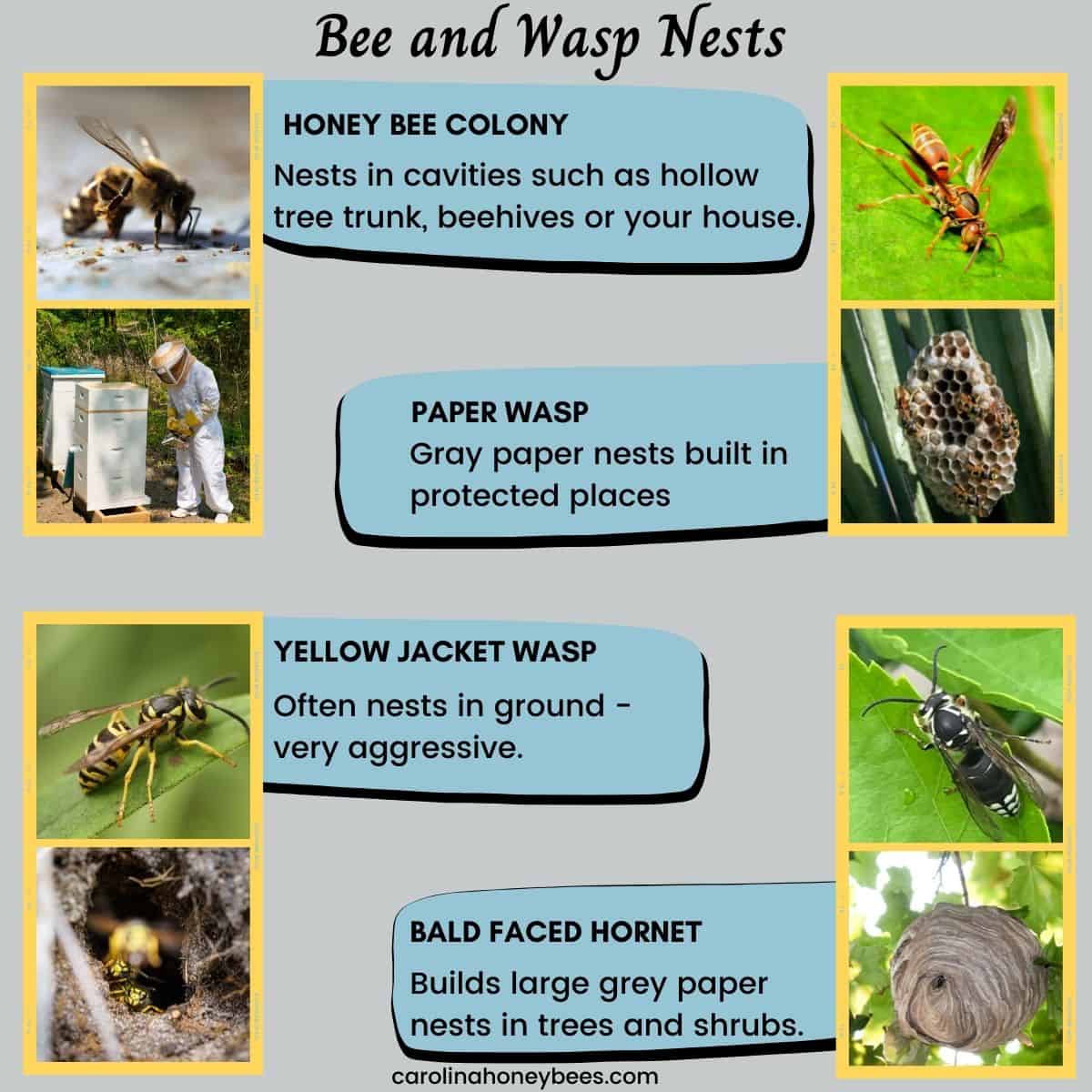
Here is a general overview of the primary differences between the nest of honey bees and wasps:
|
Feature |
Honey Bee Nest |
Wasp Nest |
|---|---|---|
|
Nest Material |
Beeswax |
Paper-like Wood Pulp |
|
Location |
Cavities, Trees, Walls |
Eves of House, Shrubs, Ground |
|
Shape |
Irregular Comb Sheets |
Layered or Umbrella Shaped |
|
Inhabitants |
Honey Bees |
Wasps (or Hornets) |
|
Behavior |
Generally Calm |
Often Aggressive |
What a Bee Nest Looks Like
Well of course I must begin with honey bees. After all – I am a beekeeper and we manage colonies inside beehives. But, you might see a wild colony of honey bees nesting in a hollow tree.

Sometimes, they choose other enclosed spaces such as the walls of a home. This can be a big problem because a beehive containing a live colony is not seasonal. They don’t go away when cold weather comes.
If nothing causes them to die, they will still be there next year… and so on. Homeowners often pay a lot of money to have honey bees removed from their house.
Female worker bees make beeswax with special glands on the underside of their abdomen and construct sheets of honeycomb. Other insects do not make beeswax.
Other Bees Nesting Habits
Most of the bees in the world are not honey bees, there are thousands of different species. Each has its own individual nesting habits.
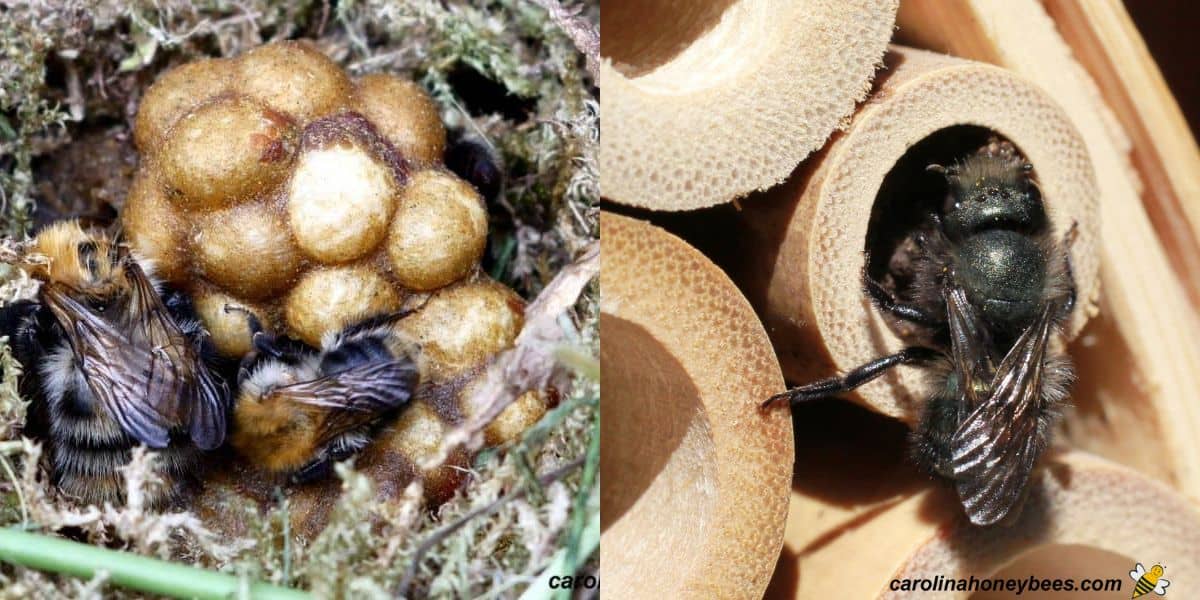
Bumble Bee Nests
You will likely never see a bumble bee nest but you might walk by one. Unlike honey bees – bumble bees often nest in the ground. They prefer burrows left by rodents etc.
I have accidentally observed a nest of bumble bees in the ground before. They did not mind if I watched from a distance.
This is a seasonal nest that will not grow very large and be gone by Winter. Leave these native bees in peace if you can.
Solitary Bees
You may find a solitary bee nest and there are many different types. Mason bees differ from honey bees but they are a good example of a beneficial pollinator.
They often live in cracks in masonry, hollow stems or tubes provided by homeowners. This kid-friendly project – tin can bee craft is used to teach children about solitary bees.
The reproductive female selects a site for a home and lays eggs. In some species, after provisioning the nest with food, she never meets her young.
This post may contain affiliate links. Carolina Honeybees earns a tiny commission when you shop from our links. See our privacy policy for terms.

What a Wasp Nest Looks Like
The most common nests I find in and near my home are paper wasps’ nests. A small grey oval structure hanging from the eaves of a roof or old building with a few protective wasps on the surface is common.
Early in the season, they are very small. But, they can grow rather large. Over the Summer months, I have seen them reach a width of 6″ and more.
Wasps may build a nest inside a closed cavity but most of these nests are in the open – exposed and easy to see.
Yellow Jacket Wasp Nest
One notable member of the wasp family – is the Yellow Jacket Wasp. This insect is commonly misidentified as a honey bee. But, honey bees and yellow jackets are very different.
Yellow Jackets routinely live in the ground (in general, honey bees are not ground dwellers). Yellow jacket nests can grow very large and are often unnoticed until mid to late Summer-when population is at its peak.
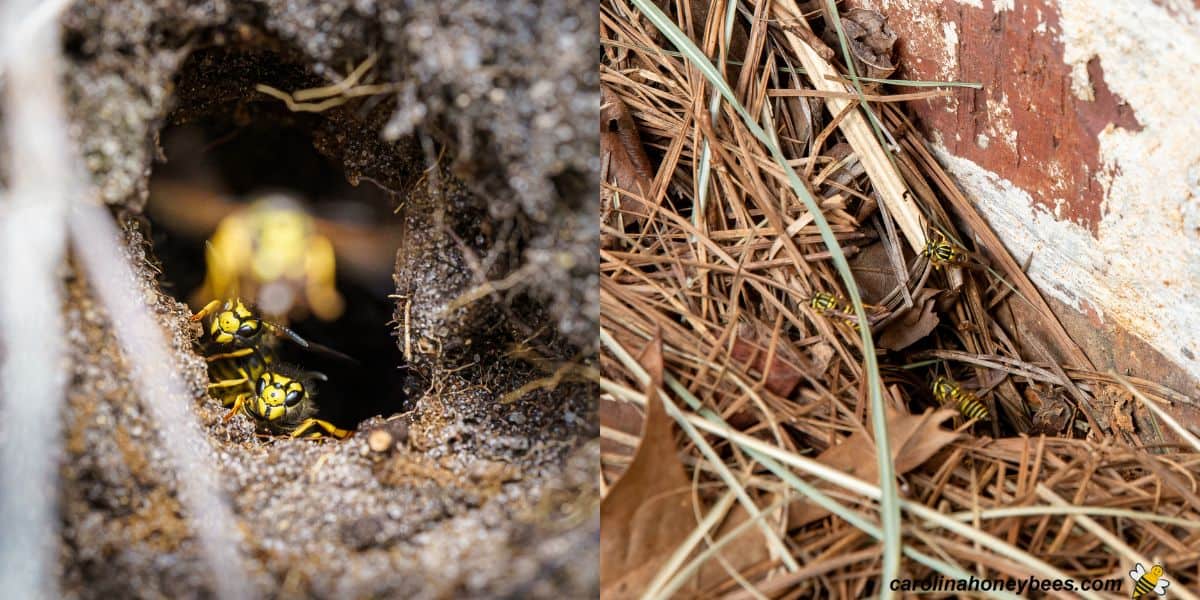
Though they serve a useful purpose in pest control, they are not one of the most loved insects. Their aggressive nature makes them a serious stinging hazard.
Likely you will not see the actual nest – only the small hole where the wasps can be seen coming and going.
If you can not (or do not want to) destroy the nest, mark it clearly and advise everyone to stay far away. Once Winter arrives – they will be gone.
Using yellow jacket traps early in the season may reduce the number of colonies later on – you can even make your own yellow jacket trap.
Hornet Nests

Hornets’ live in very large paper nests. Usually located high in the tree tops, you may not see them until Winter-after the leaves are off the trees. The nest will be abandoned when Winter arrives.
Hornets are very aggressive around their home and the sting hurts! Stay away – if they are not located near a human space, leave them.
Hornets do a good job of catching flies and other insect pests. Even the parasitic fly that causes – Zombie Bees may fall prey to hornets.
The black and white hornet – that we call “bald-faced hornets”, I’ve been told are not technically true hornets – but I wont go into that conversation. As long as you stay away from the nests and do not bother them – they are generally calm.
European Hornets Nests
We have several types of hornets around our area that do little harm. However, there is one type of hornet colony that I will destroy when found.
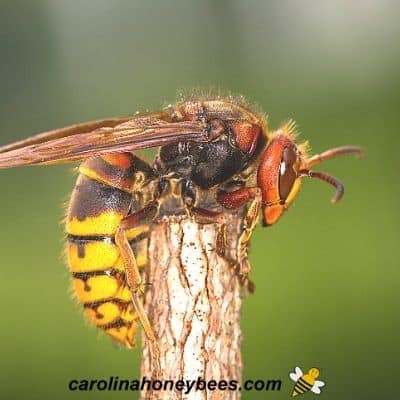
This is the large yellow European Hornet – similar to the Asian Hornet (Murder Hornet) or the new Yellow-Legged Hornet invasion) but the European hornet is already established in the US.
Like Yellow Jackets, they are predators and can be a serious predator of honey bee colonies.
They often nest inside tree cavities-though I have seen them living inside walls. Relentless in attacking honey bee colonies in mid-Summer, they are not welcomed at my home.
Key Points
Wasps build aerial nests, ground nests or nests inside cavities. Bees tend to build inside cavities (hollow trees – honey bees), (burrows – bumble bees), (hollow stems etc – mason bees).
This is a telling difference between a bee nest and a wasp nest – the wasp nest will not have beeswax. Wasps do not have wax glands and cannot make honeycomb.
Their grey nests of paper-like material are made with chewed wood. The exception is the solitary Mud Dauber wasp who builds a home with mud.
Wasps nests are only used for one season – they are not reused. When the season winds down and all the young are mature, the site is abandoned.
If you really want to practice identifying bees of all kinds – I recommend this book – The Bees in Your Backyard. I have had it for several years and it contains a ton of good info.

Get the Buzz on Beekeeping & Life with Bees..
Subscribe to my weekly newsletter. Practical beekeeping guidance, along with honey uses, beeswax projects, and bee-friendly gardening ideas.
A Honey Bee Swarm is Not a Nest
Honey bees swarm to make new colonies – half the members of the colony leave to find a new home. On their journey, they temporarily sit down in a nearby tree or bush.
Seeing this mass of bees hanging from a limb may seem to indicate the presence of a nest. This is not usually true.
In a few hours, the swarm will leave to journey to their new home. But occasionally, the swarm is unable to decide on a new site.
In this case, they begin to build comb attempting to nest in the open. If you see this happening, call a local beekeeping association to see if they can help. Most exposed honey bee nests do not survive Winter.
FAQs
Expect a wasp nest to be active for 3-4 months during the warm time of year. By the time cold weather arrives, the nest will be abandoned.
Honey bees do not normally nest in the ground. You are likely seeing a type of wasp, such as the Yellow Jackets wasp. They are be dangerous -stay away.
Any adults not killed may return to the nest site for a day or so. They are attracted to the pheromones left behind.
Bees and wasps that nest for one season will not return to the nest after Winter. Honey bees typically maintain any active colony year round. If you need honey bees removed, call a beekeeper.
Types of nesting habits include: ground nesters (build nesting in holes in the ground), wood tube nesters (use hollow tubes or plant stems), and cavity nesters (construct homes inside open cavities) such as honey bees that build wax comb inside hollow tree trunks.
Some folks have an true intense fear of bees (apiphobia). This often results in a call to destroy these nests. Nest should only be destroyed in situations where human safety is an issue.
Even a bee friendly garden can benefit from having a few predator wasps around. This helps balance out the ecosystem.
No, each insect builds and occupies its own nest.
A Final Word
Whether you see a bee nest or a wasp nest, you are seeing the next generation of these beneficial insects. Sometimes they must be destroyed for public safety.
Here on my little homestead, we do destroy nests that are large and near areas where we walk a lot. However, those that are high in the eves of the barn are left to provide some insect control.
Seek professional help in removing honey bee colonies especially in regions with Africanized (killer) bees. As for the other types of nests, try to leave them alone and let nature take its course.
I have a beach ball size ,round paper looking next that’s is in a corner inside my basement entrance at head level. It’s winter here in Michigan so I’m was wondering what to do with the nest ,I don’t want that big of a nest when warm weather comes back am not sure about the breed of bee or wasps. It’s just huge. I don’t want visitors come spring,please help so I can fix the issue before warming weather hits.thank you i enjoying reading on bees but not a lover of them forsure.
Tim, That sounds like a hornet nest. Not a neighbor you want to have around. Now I assume it is very cold in your region. Hornets do not survive cold temps. Most folks just knock the nest down on a very cold day. Now having said that – we are plagued with warm then cold, then warm days in South Carolina during Winter. A student teacher friend harvest a nest for a classroom decoration one early Winter. Well, there were a few hornets still in residence and when they warmed up inside – you can guess what happened. So be sure to handle this project in very cold weather.
I have a strange looking nest.
It’s white
It’s in my honeysuckle Bush
What is it
Likely wasp or hornet – if so it is seasonal and they will be gone when cold weather arrives.
I live in rural Scotland & I’m witnessing an extraordinary sight. Every year we have wasps creating nests in our roof space, usually 3-4 entrances around the facia boards so I can’t tell if these are multiple nests or multiple entrances. The most visible entrance has been very busy – until today. Suddenly out of nowhere this entrance is extremely busy with large BEES! No wasps in sight. The bees are large, very dark, heavy with pollen. I can’t imagine wasps being overtaken by bees but that’s what appears to have happened within 24hrs. I can’t find any information anywhere about bees that could account for this but would be fascinated to hear from a bee expert. Thanks!
How interesting. Unfortunately, while I do know a bit about honey bees I am not as knowledgeable about other bees species as I would like to be.