
How do Bees Make Wax? (Inside the Hive)
Many people wonder, “How do bees make wax?” The answer is rather simple – honey bees produce wax from special glands on the underside of their abdomen. Worker bees use this natural wax to build honeycomb for storing honey and raising young bees. The process itself is remarkable and deserves a closer look.
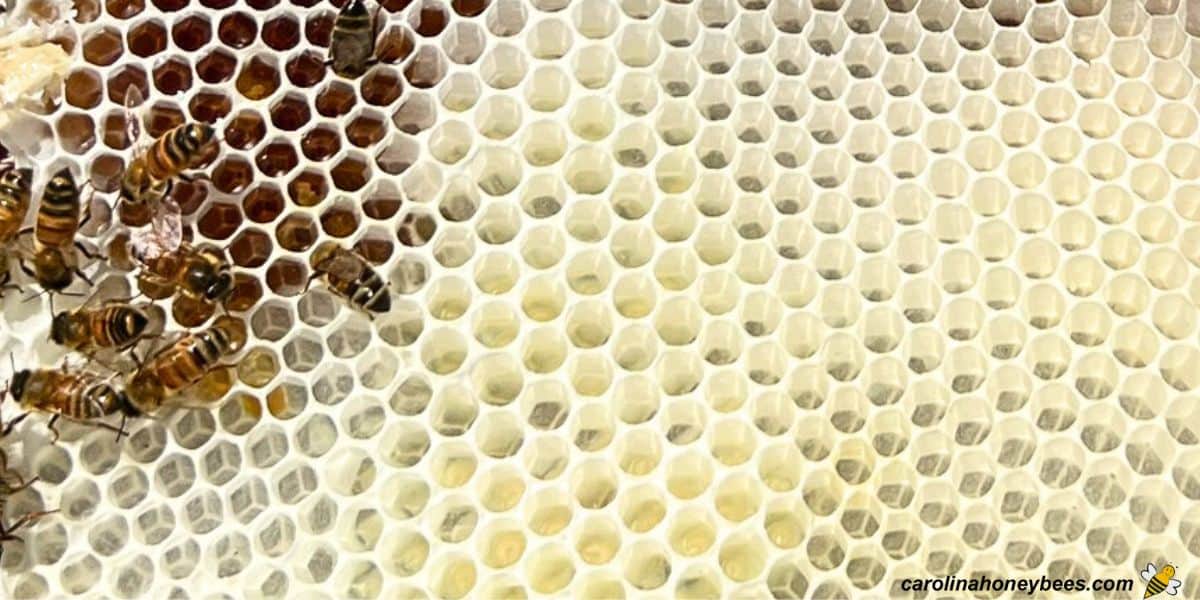
Beeswax is a natural wax that is made by honey bees of the genus Apis. An interesting honey bee fact, only the worker bees are able to perform this special task.
What is Beeswax?
Beeswax is a natural wax produced by worker honey bees. It is used for various purposes in the hive.
Scientists have identified hundreds of compounds within natural beeswax, giving it unique properties valued by both bees and humans.
Not every chemical compound in beeswax has been identified. However, we do know that it has over 280 different compounds consisting of many acids, esters, polyesters and fatty alcohols, hydroxymonoesters.
Is Beeswax Different from Honey?
Beeswax and honey are two very different products made by honey bees.
Honey is a carbohydrate-rich food created from flower nectar, while beeswax is a natural wax produced by worker bees from special abdominal glands.
Bees use honey for energy and beeswax for building honeycomb inside the hive.
How Do Bees Produce Wax?
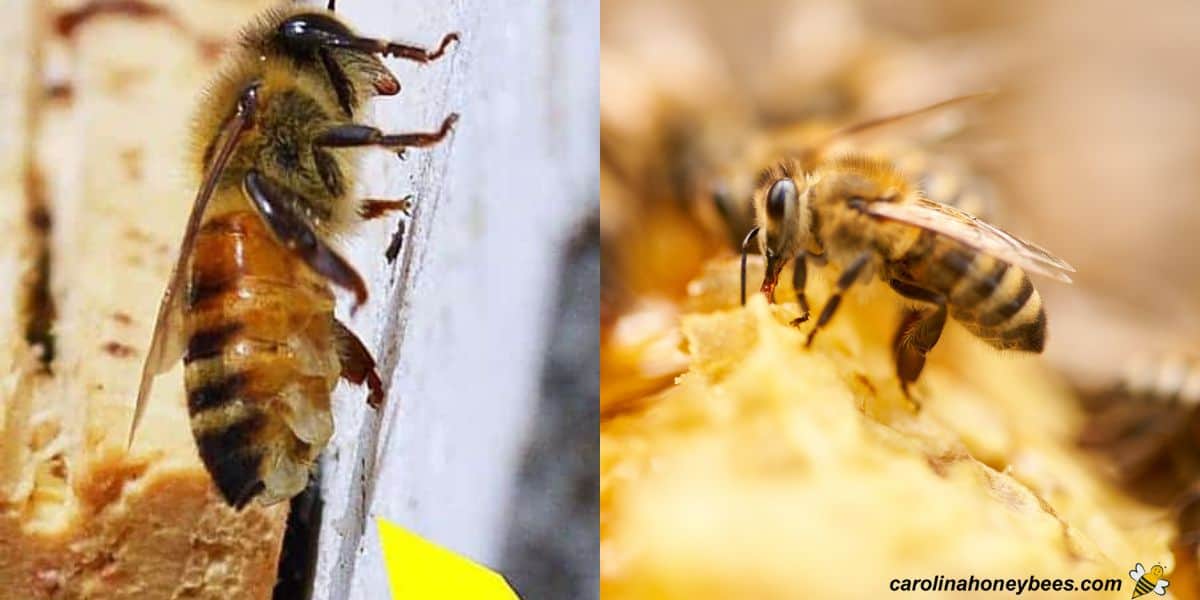
Among several species or types of honey bees, most of the wax we use comes from Apis mellifera (the Western Honeybee).
Some insects collect materials for nesting (i.e. bees nest vs wasp nests). But, not our honey bees – they make their nest from materials produced by their bodies.
Worker Bees Have Special Wax Glands
Only worker bees have the special wax glands needed to produce beeswax. Four pairs of wax-producing glands (total of 8) are located on the underside of the abdomen.
These female members of the hive are the workforce for the colony. They serve as engineers and architects to oversee the entire comb building process.
Young Bees Produce the Most Wax
While any of the workers can make wax, it is the young adults that are the best wax producers.
Adults around the age of 14-21 days of age can produce wax much more quickly than older bees.
This is why a colony needs a large population of young workers.
Beekeepers hoping for drawn comb to be built fast – want a large portion of young bees.
Bees Convert Honey into Tiny Wax Scales
When the colony needs wax, young adults gorge on honey. This boost of food is necessary to activate the wax-producing glands.
Tiny wax scales begin to extrude from the glands. In the beginning the scales are clear in color – but they turn white as they dry.
How Bees Build Honeycomb
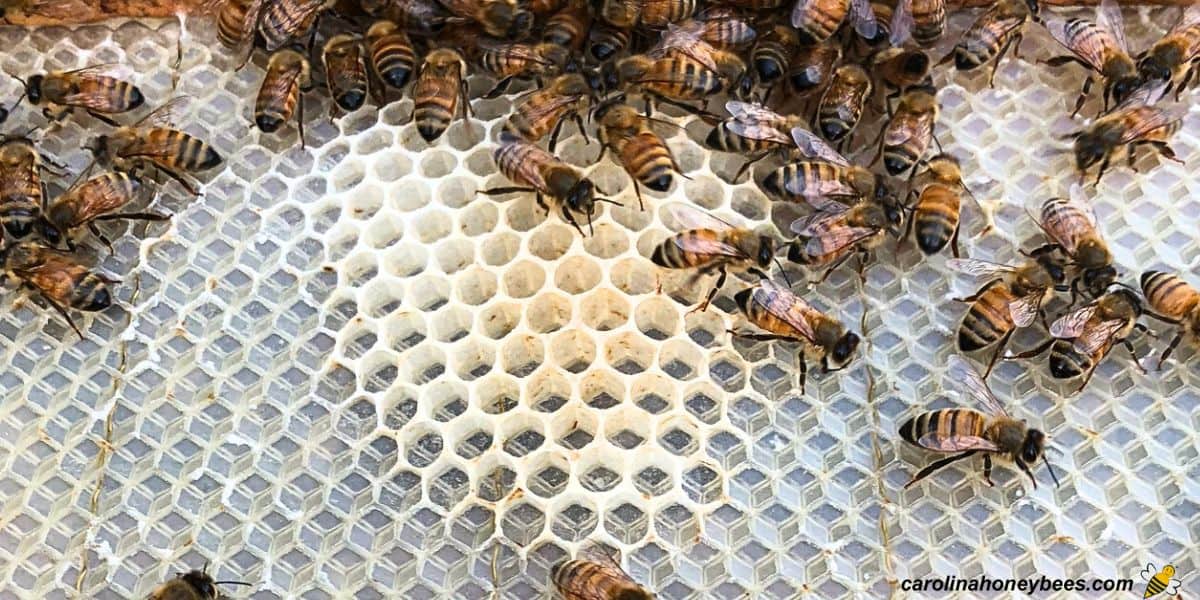
The colony has a lot of work to do with all those thousands of bits of wax. Now, worker bees begin shaping them into sheets of honeycomb.
Bees Chew & Shape the Wax
Honey bees use their six segmented legs to help shape and manipulate the soft wax flakes during comb construction.
Bees often remove wax scales from a neighboring bee and chew the wax with their mandibles (bee teeth) until it becomes soft and workable.
As the wax is molded into place, the sheets of comb slowly begin to take form inside the hive.
Working Together to Build Comb
Groups of bees often hang together in chains during comb construction. Beekeepers call this behavior “festooning bees.”
Building honeycomb is truly a community project and even non-wax producing workers help their sisters. Work continues around the clock as the colony shapes and strengthens the growing comb.
Some bees even sleep along the perimeter of the new comb to get a bit of rest — can you blame them?
Why Honeycomb Cells Are Hexagonal
I must admit that as a Master Beekeeper (who realizes how little she really knows) – it amuses me to a degree when humans assume anything about why bees do something.
Our best effort is an educated guess based on what we observe in the natural world. Perhaps, honey bees build hexagonal shapes because the design is sturdy and allows for the best use of the space.
Why Do Honey Bees Need Wax?
Beeswax is used and reused in the hive. Honey bees expend a lot of energy and resources in wax production.
The colony does not waste any:
- fresh wax used to cap cells of ripe honey for storage
- bits of older wax is used to cap brood cells
- old pieces can be mixed with raw bee propolis and used to seal cracks in the hive wall
How Much Honey Does It Take to Produce Wax?
This is another one of those questions that I believe has no definitive answer. But, the normal consensus is that it takes 8 – 10 pound of honey (energy) to produce 1 pound of beeswax.
Producing beeswax requires a surprising amount of energy from the colony. Honey bees are careful not to waste it.
My Beeswax Experience
As a beekeeper for many years, I know that rendered (cleaned) beeswax from my hives can vary in color from one year to another.
Most years it is pale yellow but sometimes cleaned beeswax is a bright yellow color. After spending time in the hive, the color of honeycomb changes.
Often progressing from a light yellow, to light brown and if left long enough you will even see black honeycomb.
This is why most beekeepers attempt to rotate out old wax comb to preserve a healthy colony atmosphere. Then your honey bees get to make new beeswax for a fresh hive.
We humans use beeswax for many things too!
FAQs
The rate of wax production by a colony depends on many variables. Warm weather conditions, plentiful food and a good population of young bees is needed.
On average, a deep sized frame of honeycomb will have about 4500 individual hex shaped cells per side.
Yes. Honey bees often clean, repair, and reuse existing honeycomb for many years. Older comb gradually becomes darker because of pollen stains, propolis, and cocoon buildup from developing brood.
Beeswax is valuable because it takes a tremendous amount of energy for bees to produce it. And significant time and labor for the beekeeper to harvest, clean and process fresh beeswax.
Fresh beeswax is generally considered safe to chew or eat in small amounts. In fact, raw honeycomb contains natural beeswax along with honey, pollen, and propolis.
Finally
The ability of honey bees to produce beeswax is one of the wonders of the natural world. The next time you see a frame of perfect honeycomb, take a moment to appreciate the thousands of worker bees that cooperated to build it — one tiny wax scale at a time.
i always love explanations of “things” in the world…that article was loaded with great information which i always wanted to know! i just bought beeswax to mix with coconut oil and cannabis (a little peppermint oil too!) for a pain topical…now i know how my ingredient is made!
Awesome… thank you I’m glad you found it interesting
Love reading all your posts and get a lot of information from your posts
Thank you so very much.
I’m a bee keeper in Battle Ground Washington, and love reading your posts, thanks for the enjoyable info.
Thank you for taking the time to reach out. I am honored!
Does Honey Bee have Dance on Honey Comb in Super ? If it is then what is called and what is it ?
It would still be a regular dance. Most of the dances are on an area of brood comb not too far from the hive entrance.
I enjoy your news letter, keep up the good work.
Thanks John, you are so kind !