
What Do Honey Bees Look Like?

One of the most popular insects around, almost anyone can answer the question: What does a honey bee look like? Yet, when these industrious insects are flying around it is not always easy to identify a honey bee on the wing. Many insects look similar at a glance which can make honey bee identification difficult. To help us stay safe, lets review some of the basic characteristics that identify our favorite bee.

You may see other insects in the garden that at first glance look very “beeish”. However, these often turn out to be wasps – there are some major differences between bees and wasps.
How to Recognize a Honey Bee
While we can picture in our mind what a honey bee looks like, identifying one in the wild is not always easy. Is it a bee, wasp, hornet or something else.
Seeing a potentially stinging insect can be a time of excitement for anyone. If you suffer from a severe fear of bees, your heart may even beat a bit faster.
Learning how to identify bees on sight can be an empowering feeling. It helps you know whether to stay and watch or back farther away.
Let’s explore some of the defining features of honey bees that can help you recognize a bee in a snap.
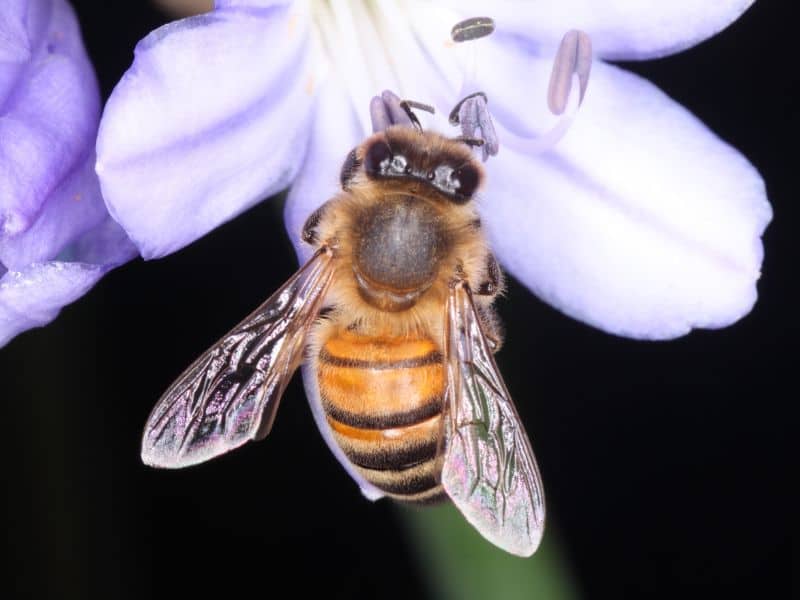
Honey Bee Appearance (What You’ll Notice at a Glance)
Honey bees are insects that belong to the scientific genus “Apis”. Like all insects, they have a defined body structure made up of 3 distinct body sections: head, thorax and abdomen.
They also share some of the classic traits of insects that you would expect to see. Honey bees have 6 legs and 4 wings (2 pair) and a pair of sensory bee antenna.
Their eyes are especially interesting – honey bees have a total of 5 eyes (though you may have trouble counting them).
Two large compound eyes are used for sight and three smaller honey bee eyes (called ocelli) are light indicators.
Body Shape & Hair
The body of a honey bee make look smooth but they are in fact covered with short hairs – even the surface of the eyes. This gives them a slightly fuzzy appearance.
While not as fuzzy as their bumble bee cousins, honey bees are covered with tiny hairs. These hairs play an important role in collecting and carrying pollen.
This is why many times bees are used for pollination of some of our food crops.
Specialized Features
There are several species of honey bees in the world and different races or types of honey bees within each species. In the field, they all look very similar.
Honey bees have specialized body parts or (bee anatomy) that help them perform their daily tasks. Worker bees, for example, have pollen baskets on their rear legs. These are used to carry balls of pollen back to the hive.
Their two pairs of wings help the honey bee travel long distances to gather food. Wings can also be used when bees are fanning to control temperatures inside the hive.
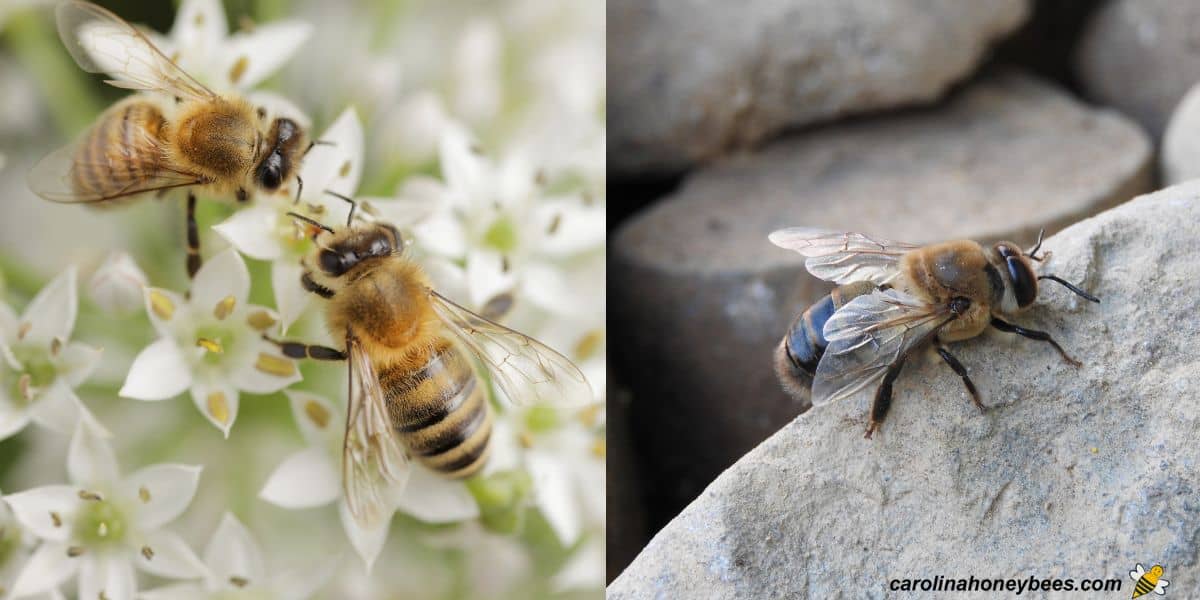
You will often see fuzzy worker honey bees visiting flowers. You might see male- drone bees – identified by their noticeable larger eyes.
Size of Honey Bees
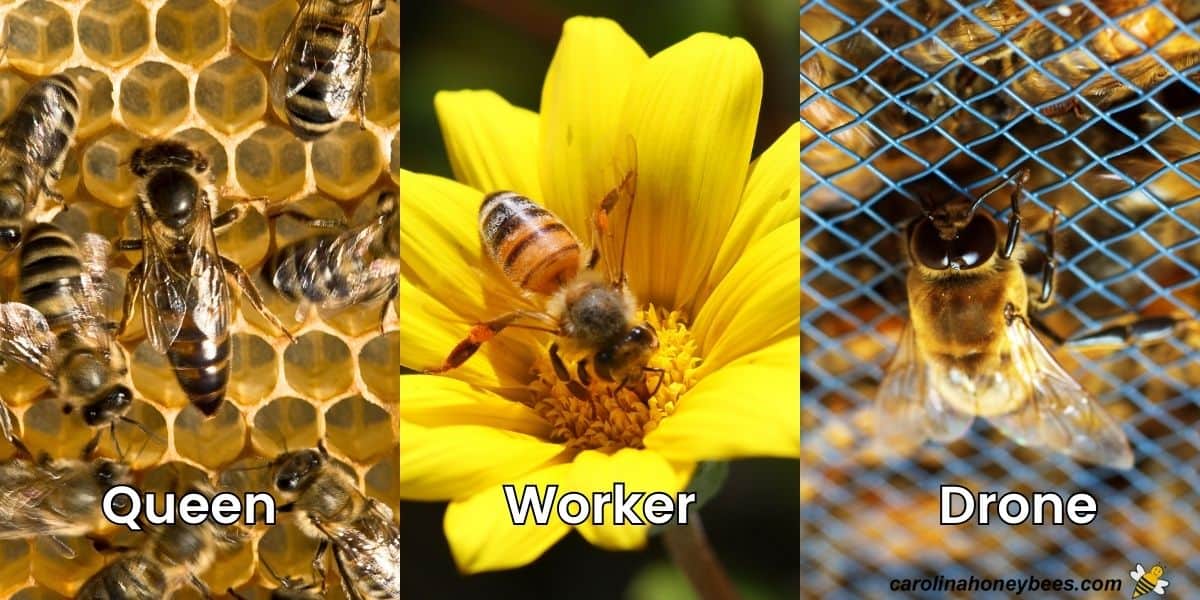
How big do honey bees get? Well, it depends to a large degree on the sex of the bee. The queen bee is the largest size bee in the colony reaching a size of 20-25mm. However, it is rare to see a queen outside the hive.
Drones or male bees are slightly bigger than workers reaching a size of – 18-20 mm. You may see them away from the hive but they do not gather pollen or nectar.
Female worker bees average between 9 and 15 mm in length. Most of the members of a colony are workers. It is not unusual for colonies to have thousands of workers serving as foraging bees.
Color of Honey Bees
In art, we draw bee pictures using a lot of yellow and black. Actually, the color of honey bees varies quite a bit. They can appear in various shades of black, brown, and yellow.
Some honey bees have noticeable stripes on their abdomen but some do not. The only noticeable difference would be light or dark coloring and the vibrancy of stripes.
Not native to the United States, some of the first bees brought over from Europe were very dark or black bees.

Get the Buzz on Beekeeping & Life with Bees..
Subscribe to my weekly newsletter. Practical beekeeping guidance, along with honey uses, beeswax projects, and bee-friendly gardening ideas.
What do Young Honey Bees Look Like?
Beekeepers have to learn how to identify bee brood (developing and young bees) in the hive. Honey bees go through several stages of development.
The honey bee life cycle begins as an egg laid by the queen bee. In the second stage, bee larvae look like white grubs. As the young develop, each cell is sealed for the final transformation.
When baby bees complete their development, they emerge from the cell fully grown. In fact, young honey bees look pretty much like any other adult in the hive.
During the first few hours after emergence, we call them a “callow bee”. They may have a greyish appearance for a short while.
Of course, you will likely never see a baby bee unless you become a beekeeper!
How to Identify Honey Bees vs Other Insects

Many insects are commonly mistaken for honey bees. Yellow jacket waps, paper wasps, carpenter bees and even bumble bees are similar in appearance.
- basic anatomy – a true bee has 6 legs and 4 wings (flies and other insects will not)
- body shape – honey bees have a blocky body and lack the thin waist seen in wasps
- body surface – honey bees are fuzzier and not as smooth as wasps
- watch for pollen – bees collect colorful balls of pollen to feed their young
- observe behavior – both bees and wasps collect nectar – bees forage longer and slower
- consider a nearby nest – Bee nests and wasp nests are very different. Honey Bees nest in cavities and not normally in the ground.
Identifying a Swarm
Seeing a large number of insects visiting flowers often leads people to think they are see a honey bee swarm. Many time is it not and the bees have been incorrectly identified as honey bees.
A swarm is a ball shaped mass of bees that may sit down in a tree for shrub. In most cases, they will leave in the next day or so to start a new hive.
If they hang around for several days, check with a local beekeeping association. A beekeeper will likely be glad to come and collect them.
Swarms are generally not dangerous but do not allow kids or pets to harass them. Even honey bees will sting in defense.
Pictures of Insects Similar to Honey Bees
The most common insects often confused with honey bees are Bumble Bees, Carpenter Bees and Yellow Jacket Wasps. Their vivid markings are often confused for honey bee stripes.
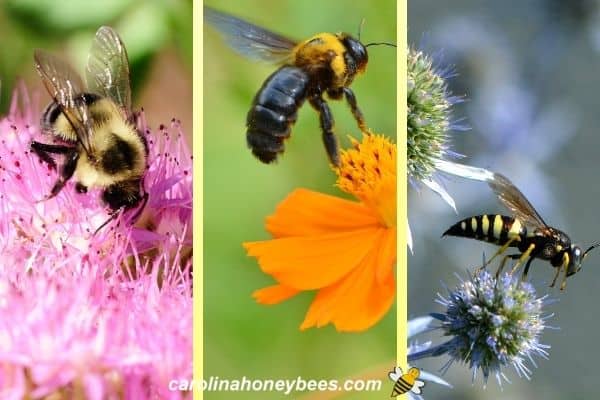
However, there are other insects that look so much like honey bees that they may be mistakenly mis-identified even by beekeepers.
- hover flies
- hummingbird moths
- mason bees
- cicada killer wasp
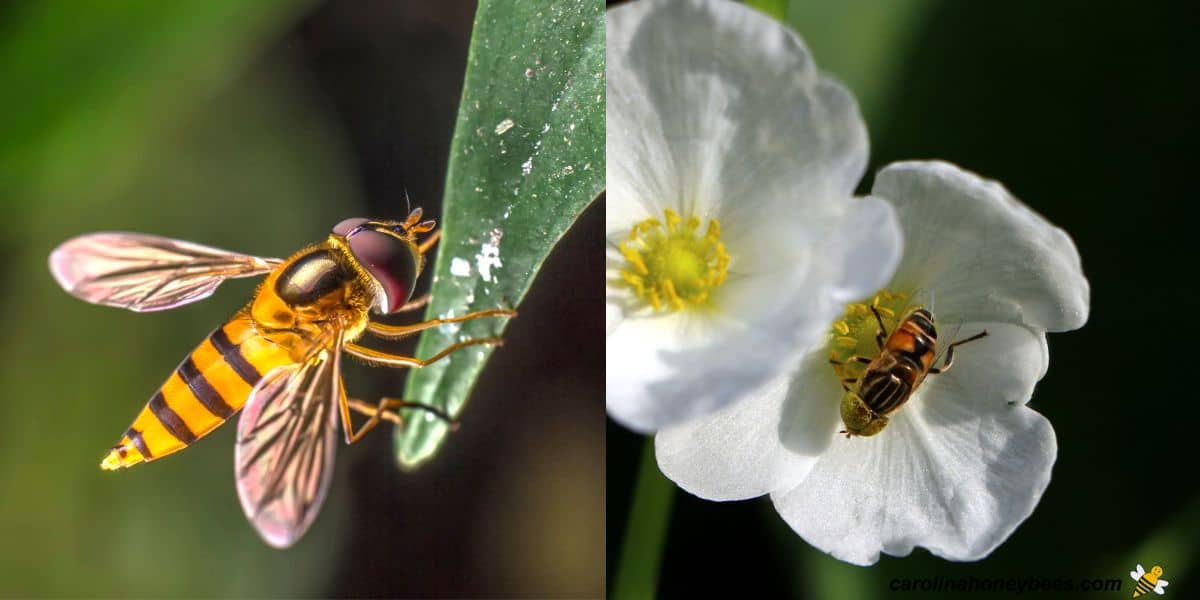
Hover flies are easily mistaken for bees. With their body shape, fuzzy covering and markings, they are much like a bee. However, they only have 2 wings instead of 4 wings that we find on the honey bee.
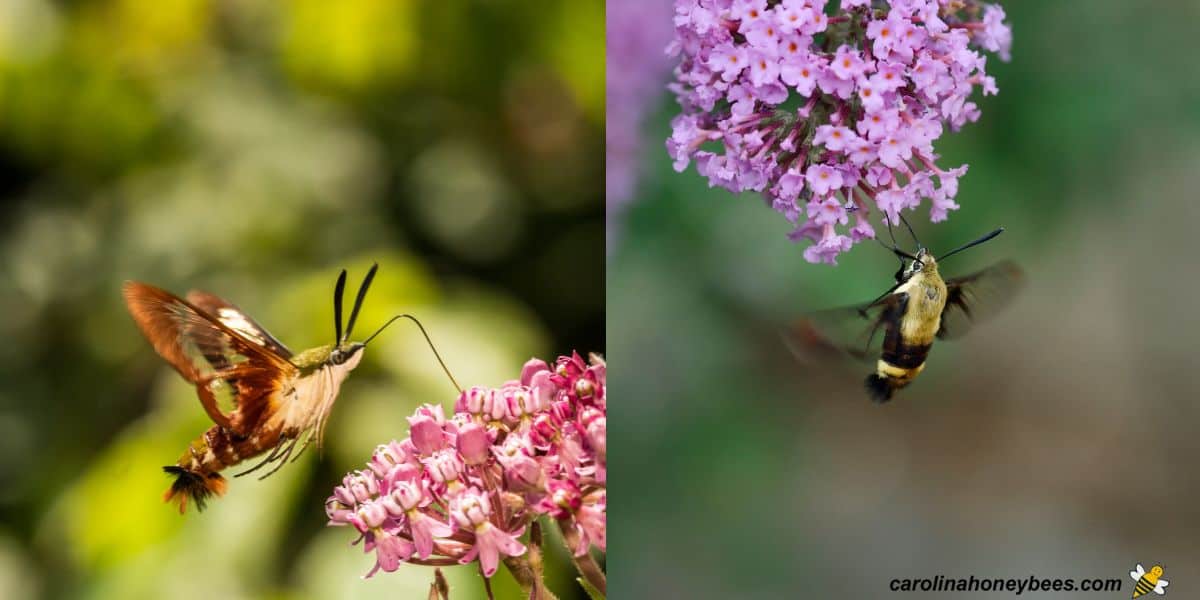
A bit large to be confused with a honey bee, the hummingbird moth makes quite a display in the garden. They are often thought to be some type of bumble bee.
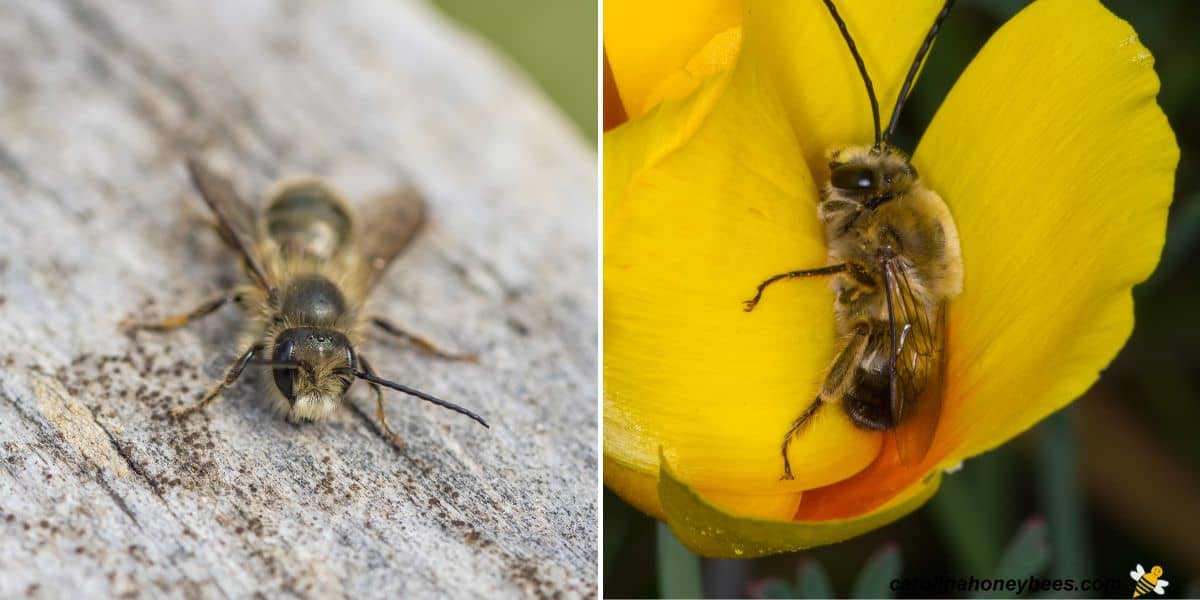
There are several varieties of Mason Bees – similar to honey bees. Some look more like common house flies while others closely resemble our honey bee.
Mason Bees do not live in large families, they are solitary insects. The easiest way to identify them is by the metallic sheen than many have on their body.
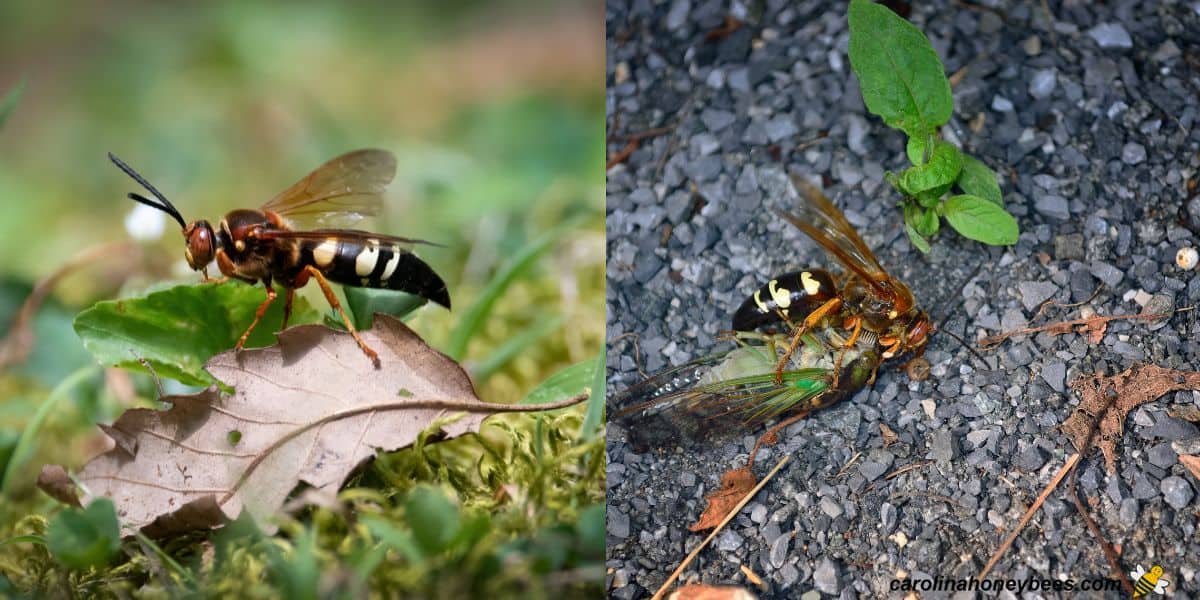
The Cicada Killer Wasp has the bright black and yellow coloring of many bees. They prey on Cicadas and are not aggressive to humans. Left alone, they rarely sting.
FAQs
Correct identification helps protect beneficial pollinators and prevents unnecessary removal or harm to honey bee colonies.
Yes, honey bees are fuzzy. Their body and even their eyes are covered in small fine hairs. Younger bees have more fuzz that older members of the colony.
A killer bee looks like any other honey bee. In spite of a slight variation in size, they are indistinguishable in the field.
True identification of killer bees, or Africanized Bees takes place in the lab with precise measurements.
Honey bees vary in size. Generally workers measure around 0.5 to 0.6 inches in length. Drones are slightly larger ranging from 0.6 to 0.7 inches. The queen bee is the largest, often reaching lengths of 0.7 to 0.8 inches.
Final Thoughts
Learning what honey bees look like and how to identify honey bees among other insects is a very important life skill. Bees have shared a long history with mankind, in some cultures, beekeepers follow the tradition of telling the bees about major life events. They are fascinating insects but enjoy them from a safe distance-they have a lot of work to do.