
Varroa Mite Treatments & Control

Varroa mites are one of the most serious challenges facing honey bee colonies today. Most every beekeeper will be faced with finding effective varroa mite treatments at some point. This article provides a simple overview of the main varroa mite control methods used by beekeepers currently. This is a general look at the struggle as treatment options are always changing.

Successful varroa control involves understanding your options. You must choose the method that fits your bees, your management style, time of year, eta. There are no perfect answers in dealing with this major pest of honey bees.
Why Varroa Control is Necessary
The average bee colony has several types of mites inside-most cause no harm. Varroa mites (Varroa destructor), however, are a different story.
Varroa mites weaken bees by feeding on them and spreading various bee viruses throughout the colony.
Mites reproduce quickly with newly hatched mites feeding on developing bee larva. This sets up a deadly cycle of sick, weak bees. When mite levels become too high, colonies often decline and collapse quickly.
This is why most beekeepers need to use some method of reducing mite populations and slowing down their impact on the hive.

Key Things to Know Before Treating for Varroa
Before choosing a varroa mite control method, there are a few things to keep in mind.
- not all treatments are equally effective
- some have temperature restrictions
- some available varroa mite treatments (yes, even approved treatments) may contaminate the honey and beeswax in the hive (at supposedly safe levels)
- some treatments can not be used when honey supers are on the hive

There is also no single answer to the question, “how many mites are too many”. Treatment decisions are based on mite levels, season, etc.
We beekeepers have several methods for testing for varroa mites to give an estimation of mite numbers.
For more info, see my guidelines in – “when to treat your bees for varroa mites“. Determining the varroa mite threshold for your apiary is often a moving target.
This post may contain affiliate links. Carolina Honeybees earns a tiny commission when you shop from our links. See our privacy policy for terms.

Chemical Varroa Treatments (Organic & Synthetic)
Research has provided us with several chemical treatment options for varroa control. These products differ in how they work and when they can be used. Your own beekeeping philosophy may determine which you use:
- Organic (soft) Varroa Treatments
- Synthetic Treatment Options
Soft Varroa Treatment Options
Many of these treatment products are organic. They are derived from naturally occurring substances and are widely used by beekeepers.
Soft methods of varroa control are my favorite. I have had success with all that I have tried – but I have also lost colonies along the way.
They can be not as effective as synthetic options – you must not let the mite population get out of control before using them.
Treatments included in this category include:
- formic acid
- thymol based products
- oxalic acid
Formic Acid

Formic Pro is currently my best option when using formic acid. It words as a fumigant and kills mites in capped brood – (many others do not).
This organic treatment can be troublesome in hot weather – a big problem in my region. Extreme temperatures above 92° F during the treatment application may cause colony absconding.
I periodically use formic acid treatments in my colonies, but not during hot weather.
Some beekeepers have reported queen that died or a reduction in brood production. I never had any problems while using this product. But, I always follow the directions on the label!
Thymol Products
Thymol products also do a good job of varroa control in beehives. I have used several of these over the years with good results. Yet, they must be used in a particular temperature range- a challenge for southern beekeepers.
Apigard
Apiguard is a thymol gel that acts as a fumigant. Temperatures should be between 59° F and 105° F. (Personally, I would want it to be much cooler in my humid climate before I used it in my hives.) Use twice at 2-week intervals to complete a mite control plan.
Api Life VAR
CONFUSION ALERT: There is a difference between Apivar and Api Life V A R. One is a synthetic chemical and one is a softer essential oil based treatment. Both are approved for use in beehives.
Api Life Var (thymol, eucalyptol oil, menthol, camphor) It has proven very effective. The product features a green spongy pad impregnated with oils and works as a fumigant.
Pads are placed on the top bars inside the hive – 3 times at 7 day intervals. An acceptable temperature range is between 65-85° F.
Oxalic Acid
Oxalic acid (Oxalic acid dihydrate-organic acid) is used in two ways for mite control – as a drizzle or as a fumigant (vaporization).
- drizzle – used when little to no brood is present
- fumigant – vaporization method
Oxalic Acid Vaporization (I used this method). A small amount of OA crystals are placed on a special wand and slid into the hive. The wand heats causing the crystals to vaporize.
As the vapor cools, crystals reform inside the hive. Honey bees remove the acid crystals and expose varroa to the substance.
Oxalic acid vaporization is a very effect varroa mite treatment during Fall and Winter – times when less brood is in the hive. It does not kill mites hidden inside the brood cells – many beekeepers use timed repeated treatments to kill mites at each stage.
But, some researchers feel the control is not good enough. That even using multiple treatments over a period does not reduce the mite load enough.
VarroxSan
VarroxSan is an organic mite treatment that used special strips, impregnated with oxalic acid. The slow release method is able to kill mites over a longer time period.
Even better, it is not heat sensitive and where approved can be used when honey supers are on the hive.
Synthetic Treatment Options
Synthetic treatments are manufactured chemicals developed specifically for varroa mite control. They are effective and approved because they pose little risk to the bees or humans.
However, heavy usage has resulted in varroa resistance to some of these products. If you use them, it is important to rotate them. Use your own judgement when deciding what to put in your hive – weigh the risks-rewards.
Common Synthetic Treatments include:
- Amitraz-based products
- Fluvalinate
- Coumaphos
Apivar (amitraz)
Apivar (amitraz) is a synthetic miticide that kills by contact. Impregnated strips are placed near the brood nest for a period of time. This chemical was used for mite control in the past, then pulled and now allowed again.
Apivar has time usage restriction. Do not place honey supers on your colony for at least 2 weeks after treatment. Low levels of residue can be detected in the beeswax and honey.
Apistan (fluvalinate)
Apistan (fluvalinate) is an older substance used for mite control in honey bees for years. Impregnated strips kill by contact – they too are placed inside the hive and removed after a certain time period.
Reports of wide spread resistance to fluvalinate has been reported in colonies over recent years. Also, chemical residues may persist in beeswax in the hive. Most beekeepers that I know no longer use it.
Checkmite+ (coumaphos)
Sold as Checkmite+ – coumaphos is another product that has been used for varroa control and coincidently also aids in controlling Small Hive Beetles.
As great as that sounds, there are serious considerations within the industry regarding the negative effects in the hive and possible bad effects on drone honey bees.
I have never used this product. Sold as a restricted pesticide in some areas – you may need a veterinarian approval to purchase.
IPM (Integrated Pest Management) Approaches
Chemicals are not the only way to fight varroa. In an integrated pest management plan (IPM) beekeepers use several methods to control varroa mites.
Mechanical Methods
Mechanical methods-such as the use of screened bottom boards allowing some mites to fall to the ground and perish was exciting several years ago.
Now, I have little confidence (IPM – screened) as a varroa control the number of mites removed is just too insignificant.
For a time, the use of powdered sugar become a popular treatment plan for varroa. Dusted over the bees and top bars – as the bees groomed themselves to remove the sugar – varroa mites would be knocked off.
I lost 10 hives to that experiment one summer. Though, I must admit that the white bees looked like little flying ghosts for a while – rather cute.

Drone Brood Removal
Some beekeepers still practice drone removal to reduce mite populations. Drones are the mites favorite host. Special green drone frames are used to encourage drone production.
Once filled with capped brood and developing mites inside, the frame is removed and frozen. This kills the mites and the drone brood is sacrificed as well.
Personally, I am not a fan of this method. You must remember to remove the frame at the proper time. Otherwise, you have just created a mite maternity ward.
Promoting Bee Health
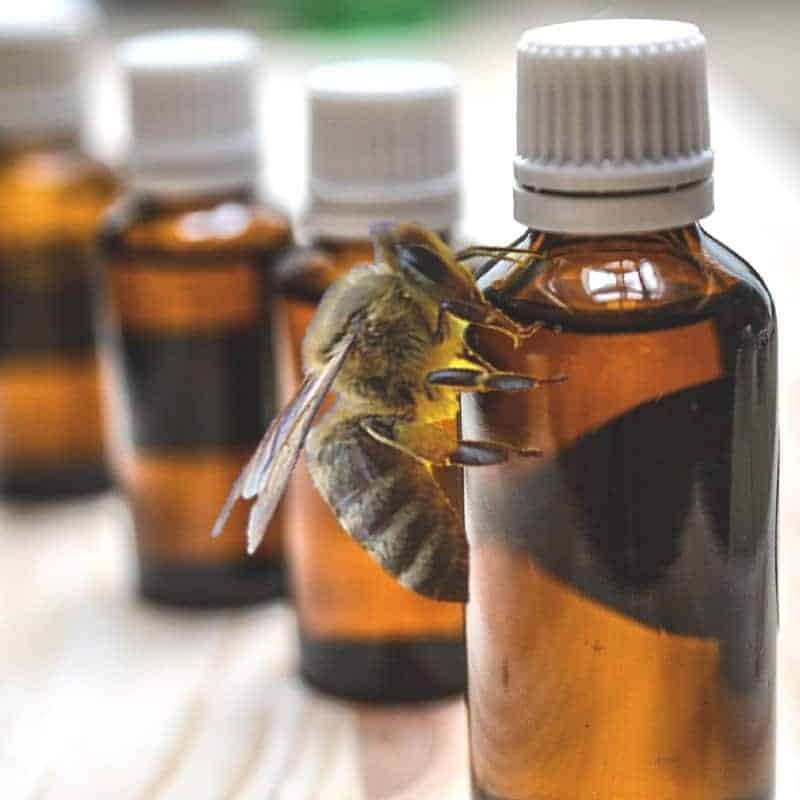
One thing we have learned is that the health of the bee colony plays a role in mite control. Several products including homemade essential oil recipes for bees are used.
And genetics play a role as well. Some strains of honey bees do a better job of controling varroa. When buying a new queen bee – finding one that has some mite resistance is a big plus.
Natural beekeeping or even treatment free is a great idea but you are not likely to be successful unless you have the right bee genetics.
FAQs
No. At this time, varroa mites cannot be completely eliminated. The goal of varroa management is to keep mite levels low enough that the colony can remain healthy and productive.
Yes. Varroa mites can move between colonies through drifting bees, robbing behavior, and collapsing hives. This is one reason why consistent mite management is important, even if your own bees appear healthy.etc.
Yes. Colonies can appear strong while mite levels are increasing. Without monitoring and timely control, even strong hives can decline rapidly due to varroa-related viruses.ey were effective.
Yes, it is common for varroa mites to develop resistance to treatments – especially chemical treatments such as fluvalinate or coumaphos – rotate your treatment methods.
The Future of Varroa Mite Control
Varroa mite control methods are constantly evolving. We are all looking for that “silver bullet” that will take us back to those pre-varroa days.
In spite of new developments (such as dsrna products), we have not found the perfect answer. Learn, study and listen to what is working for other beekeepers in your area.
Final Thoughts
What you choose as your varroa mite treatment for bees is as individual as you. The goal is not necessarily a complete kill of every mite – rather a reduction in varroa mite populations. If you are new to beekeeping – my online beginners class will help you get on a path to success.
Hi Charlotte,
Do you have any experience or knowledge of a Victor-for Varroa mite thermal treatment? We purchased one and have used it once with ? Results. We live in southeast GA, pretty hot most of the time and you are.
Thanks in advance
I do not. I think the “jury is still out” on that method of treatment. I know one beekeeper in my group who used it and it was not effective. However, that doesnt mean it would not work for others.
vaporized hive sept 8 next morn several hundred varroa on inspection board cleaned board reinstalled sept 9 around fifty mites on inspection board
Hopefully, it is working. It may take several days to be complete though as mites will continue to fall. If you still have brood, remember it has to be repeated a couple of times.
When you treat with OA, you are supposed to remove the honey supers—why? and how do you ‘mark’ frames that were treated so they don’t get ‘mixed up’ with frames that weren’t treated. I interchange my frames all the time, and am wanting to be careful about chemicals in all parts of the hive. Thanks!
I do not treat with my supers on – because that is the law. FDA regulations require it. As for the frames, I dont do much interchanging between the super I leave for the bees food and my harvest supers – so it is generally not a problem for me. However, once the hive gets a few years older – its easier to tell which frames stay on the hive longer. And, OA is naturally occurring in the hive to a degree.
I did the sticky board method last week for 3 days and counted 4 mites. I did it again for the 3 days immediately following and counted no mites. To be surre I knew what I was looking for I used a magnifying glass as well as taking pictures of the mites, so I am pretty sure in my numbers. This hive is new having started from a nuc in mid-May this year. The breeder says he gets his queens from VP Queens and they are bred with VSH. They also do an OA vaporization on the hives just before creating the nucs. Is it possible I just have very few mites at this point? I am planning to do the OA vaporization in probably November (as I will be away for all of September and October). I live about 40 miles north of Dallas, TX.
Yes, it is absolutely possible that you have a very low mite load. If you are concerned, you might do a sugar shake with nurse bees from the brood nest area. Otherwise, you OA treatment in November sounds like a good plan. Be sure to watch them next Spring to make sure mite numbers dont climb too fast.
HI Charlotte, thanks you so much for the valuable insight on treating mites. I just started two hives with nucs this late June to show my grandchildren how to raise bees. I did this 30 years ago for our children and it was a great experience. I live in Southeastern PA. Based on what I have read I think I’ll treat by Vaporization of Oxalic Acid. i did not do this 30 years ago and my bees did eventually die after 6 years. Now that I’m older and I hope a bit more wise I been researching this. Going to buy that wand. Thank you for the reference. I just tested for mites with the Varroa Mite Testing Kit from U of M. Found 1 mite in 300 bees. My questions are: Should I retest and then treat or just treat as a preventative measure? Who do I buy the Oxalic acid from? And do I treat them year last week in Oct, first week March 2019 and then after my supers are off in late July? 3x 5-7 days apart.
Hi Steve. Yes, I am a big fan of testing. Unfortunately, the years that I chose to not treat due to low count numbers – I ended up loosing hives to mites in late Fall. Here in my area, I have not been able to avoid treating. I do use the testing to evaluate how well my treatment is working. I too do the March, July Sept/Oct schedule. Legally…. you are supposed to buy the OA from a bee supply, properly labeled etc. But I “have heard” that some beekeepers buy pure (99%) OA on Amazon.
Hi Charlotte,
There is a wide range on prices of Vaporizers . How did you finally conclude that the VARROX was the best ?
I did see that the construction is such that it won’t turn over but others much cheaper also have similar handels.
The Varrox has been used in Europe for many years so I hoped the quality would be there. It has held up well so far. The big pull to spend that much was also helped by the fact that you can dunk this wand in a bucket of water to cool it. You must not put OX crystals on a hot cup – they may start to melt and damage your lungs. With the cheaper wand I would have to wait for the wand to cool before going to the next hive. This one is made so that you can dunk it right in the cool water without damaging the unit.
Thank you for all of this very helpful information on treating for mites. Can you leave honey supers on when treating with Apigard?
Thanks!
You are welcome. No, you cant have supers for human consumption on when using Apiguard.
Thanks for taking time to explain each treatment and the effects on the bees. One you gave a plus on I’ve been using and the other you gave a plus on I’ll most likely use for the rotation.
Thanks again
Thanks Tom, It is not an easy situation thats for sure! I just continue to do my best and try to keep up with changes in the beekeeping community.
Hi Charlotte,
When using OA as vaporizer do you rotate treatments and use a different product?
Thank you,
I have not had to rotate in the last 2 years. But if I did – I would use thymol or formic acid products.
Can oxyalic acid be used when honey supers are on?
I would not.
Thank you. Very informative.
I have some old equipment that i bought before taking your class and wish i had not. nevertheless do you think spraying and/or soaking the equipment in clorox water would kill all pathogens and parasites? By the way, i learned more in your class than in local club class and on you tube, thank you
Thank you Thomas. What a wonderful comment about my class. Don’t fret over used stuff. The only big problem to worry about is American Foul Brood. There is no way to get rid of that without special treatments. It is a small risk in my area but still a risk. I don’t think Clorox will do much but it wont hurt to spray it with a Clorox solution. (well before the bees arrive). If you can bring yourself to dump the honeycomb and only use the wooden ware with fresh wax foundation that will lower the risks too. In my early days I purchased a little used equipment from a beekeeper and it turned out just fine. But there is always the risk of Foul Brood.
would a good varroa plan be three 7 day treatments in the spring/early summer and one treatment in late fall { both times with vaporization}? also would you treat new nucs in spring when you get them?
All things are relative. Bee genetics, pest rate in your area etc. For me, I usually vaporize 3 times in very early Spring (5-7 days apart), 3 X after I remove honey supers for the year (late July) and 3 x in late October. Yes, I am getting a couple of nucs this year (first time – I generally prefer packages) and after letting them settle in for a week or so, I will treat them with OA vap.
How effective is the sugar dusting I see on the internet?
In my opinion, it makes the bees look pretty and white. They may eat a little of it. For mites, I have no confidence in it. It did not work for me.
Oxalic Acid Vaporization , do you leave your honey supers on during treatment? Thank you,
Hi Linda. I would remove the honey supers (for human consumption) if I need to treat. I usually avoid this by treating before and after the honey flow. We dont really have a Fall flow here so that works out well in my treatment plan.
Hi Charlotte,
What is your comment and experience about “physical treatment Anti-Mite Frame”?
Regards
I have no experience with it. Research using different types of products in mite control do hold some promise. Time will tell if this type of item is feasible or not. I am waiting until more research studies have been done.