
Beekeeping in Winter – Essential Chores
Once the hives are prepared for the cold, beekeeping in Winter gives you a break from most hands-on tasks. Gone are the days of deep hive inspections. But, that does not mean you can just forget about your colonies. They may still need some attention if you hope for high survival rates. This guide to winter beekeeping covers essential tasks that can help your bees emerge strong, healthy and ready to grow next Spring.
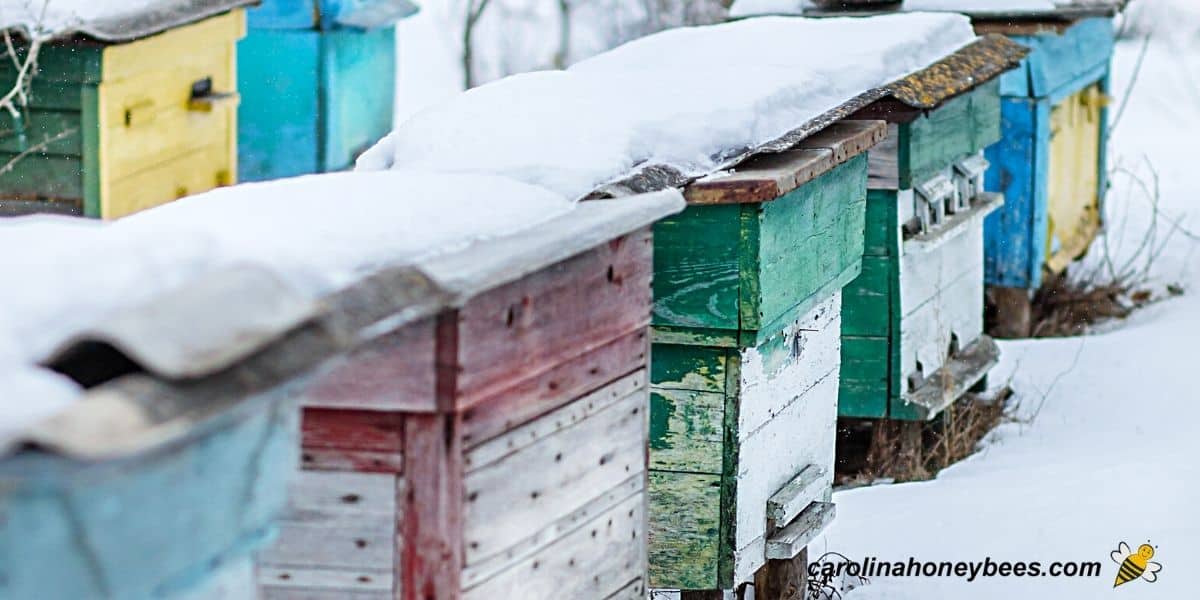
Many of us beekeepers, love having a break during the cold months. But, practicing good beehive management even over Winter can make a big difference in survival numbers.
What Beekeepers Do During Winter
Winter beekeeping is all about providing support for your overwintering colonies. We want to help without upsetting the delicate balance between life and death that is taking place inside the hive.
During the days of coldest temperatures, your honey bees are in a cluster. This tight mass of living breathing bees can generate enough heat to survive and protect the queen. That is – assuming they are healthy and have enough stored food.
In truth, wondering what is going on inside the winter hive is one of the biggest problems beekeepers face during the cold season.
Thankfully, you can help your colonies without always having to open the hive and remove frames that disrupt the bee cluster.
Here are the core responsibilities that beekeepers should focus on during Winter.
Observe Hive Activity from the Outside
Sometimes, a quick walk through the bee yard is all you need to have a minimal idea of hive status. On warmer Winter days (assuming you have some) you may notice some bee activity.
Of course, no activity does not in itself signal a problem. Some breeds or types of honey bees fly at cooler temperatures due to genetics.
I have had 6 colonies in a yard and 5 are active and one is not – yet a closer look revealed that it way doing just fine.
Depending on your climate, perhaps you have a few of the Winter plants that help feed bees. I love seeing a bit of fresh pollen coming in.
Check your equipment for tilted lids (that shouln’t be) toppled boxes, animal damage or unusual entrance activity. Sometimes, a quick check prevents bigger problems later on.
Don’t be alarmed to see short periods of intense bee activity at the hive entrance – it’s probably just a “potty break”. It could also be an small orientation flight as a few new bees are produced in late Winter.
Some folks say you should never tap on a hive. But – more than one beekeeper has visited a hive during Winter and given a couple of taps on the side – with a ear pressed to the hive wall. A buzz tells us that someone is still alive in there.
Check Your Hive Entrance
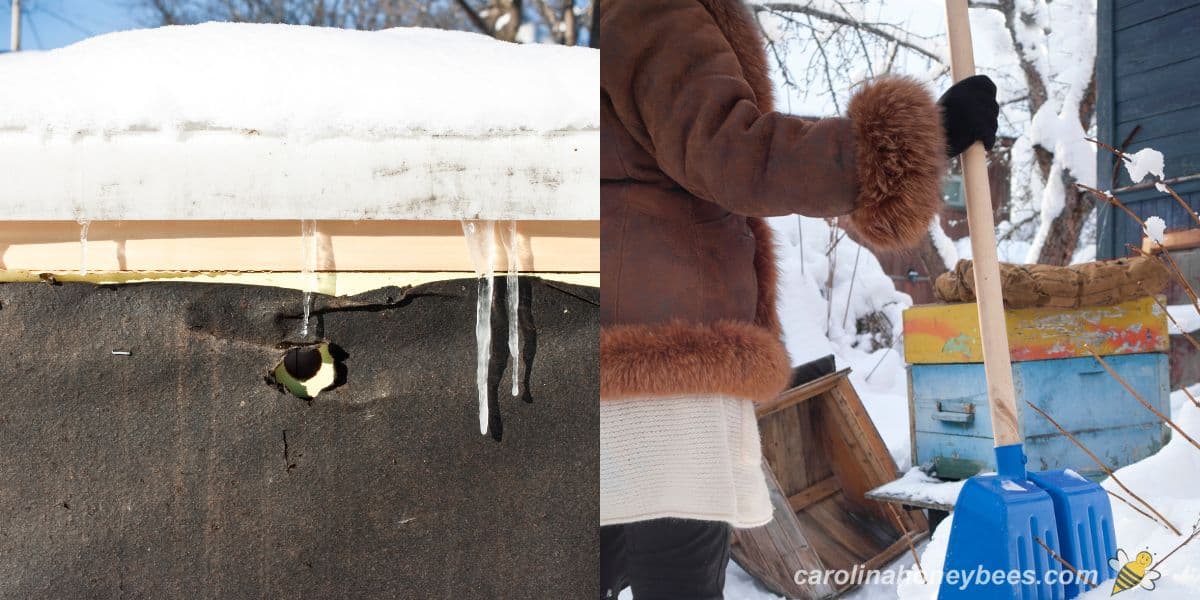
As you walk through the hives, check that your entrances are clear. This can be a special problem when we use entrance reducers on our hives – as I do.
The openings can become plugged with snow, ice or dead bees. Use your hive tool or a small stick to open them up.
Don’t be alarmed at a few dead bees. Older bees will die during Winter and cold temps may prevent workers from clearing out the dead.
If you use mouse guards on your hives, check to see that they are still in place and allow free movement of bees on warm days.
Monitor Hive Ventilation & Moisture
Another problem that some beehives experience over Winter is too much moisture. If you have ever sit inside a car on a cold day – perhaps you experienced the windows fogging up.
In a similar fashion, the body processes of the live bees gives off moisture. With the occupants gathered together in a bee cluster for warmth – no workers are available to ventilate the hive.
Watch for any signs of excess moisture – water dripping from the hive entrance or water accumulating on the underside of the top cover.
Providing adequate hive ventilation before cold temperatures arrive can help with this problem.

Check Hive Weight Periodically
Food reserves are everything for the over-wintering colony. For most colonies, the winter months are certainly not a honey-making season – even if they do bring in a bit of fresh nectar.
Some beekeepers gently lift the hive from the back or even use a scale to gauge the remaining food stores. When a hive suddenly feels lighter than it did a couple of weeks ago, they may be using up all their stored honey.

Add Emergency Feed if Needed
If your hives were properly winterized in the Fall, they may not need extra feeding. This should always be our goal.
Take a quick peak in the top of the hive. If you see lots of bees on top of the frames and no honey stores in the frames, it’s time for some emergency winter feeding.
Some beekeepers use wet sugar cakes, fondant or homemade candy boards made of sugar. Or you may try pouring a bit of granulated sugar in the hive.
In general, Winter is not the time to be feeding liquid syrup to your hive. It is best to not feed bees sugar water in cold weather.
Watch for Signs of Pests
Bees are not the only things that may want to stay warm in that cozy beehive. I dislike seeing roaches or earwigs in the hive but they do little damage.
But, mice, shrews or woodpeckers can damage wooden wear, entrances and even comb. Watch for any signs of debris that could signify a problem.
Keep Winter Records & Notes
Tracking hive observations, hive weight and weather conditions will give you valuable data for making early Spring decisions.
I am always sure to make a note in my beekeeping journal if we have an extended period of bitter cold. Did I lose any colonies during that time? Could I have done anything different?
Dealing with Winter Dead-Outs
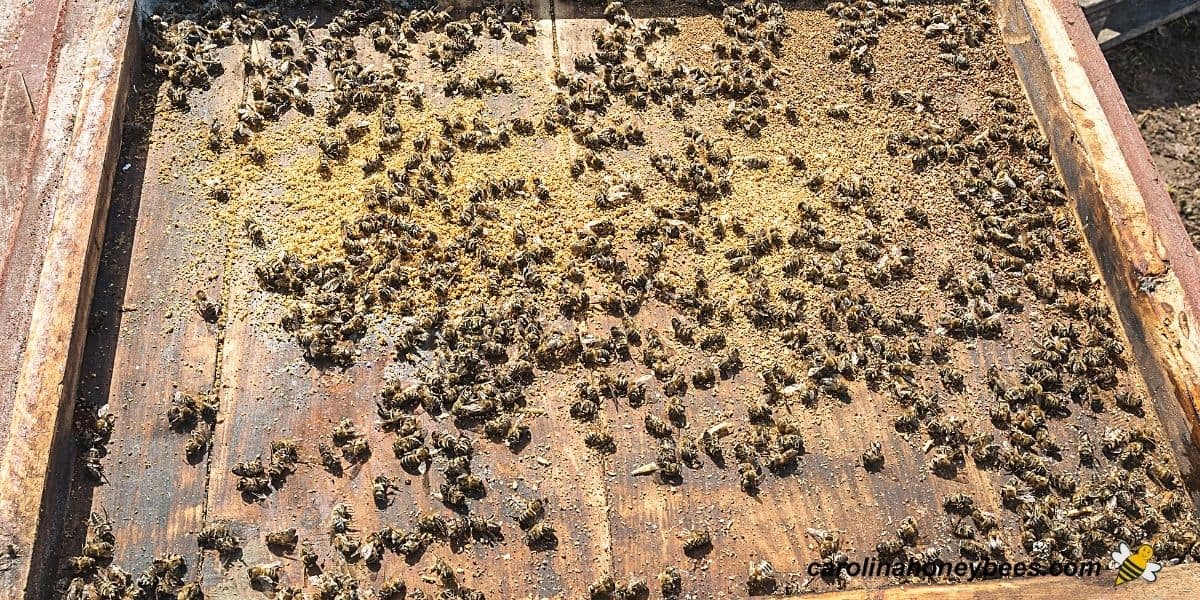
No matter how good of a beekeeper you are – some hives will die. Beekeepers often call a dead Winter hive a “dead out”.
There are many reasons beehives die during Winter. Too little food, no food in the right place, poor quality queens, and extreme moisture-all play a role in some cases.
Sometimes, the only thing you can do is clean up the dead hive and save what resources you can for next Spring.
Winter Beekeeping Checklist
Winter hive care involves a lot of observing, listening and resisting the urge to open the hive and see what’s happening in there!!
Here is a simple checklist to help you remember some of the same tasks that I use in my own bee yard.
Weekly or Bi-Weekly
- Make sure the hive is standing straight and stable
- Confirm the outer cover is secure and hasn’t shifted
- Clear snow, ice, or dead bees from the entrance
- Look for signs of animal damage (scratches, chew marks, debris)
- Listen for a soft hum that indicates cluster activity
- Check for excessive moisture on the landing board or equipment
Ventilation & Moisture Control
- Ensure upper entrances or ventilation shims remain open
- Confirm moisture boards or quilt boxes are still in place
- Check that hive wraps or windbreaks haven’t shifted
- Keep covers tight to prevent drafts but allow warm air to escape
Food & Hive Weight Monitoring
- Heft the hive every 2–3 weeks to gauge remaining food stores
- Watch for sudden weight loss (a sign they’re running low)
- Add emergency feed only if the hive feels light or bees are clustering near the top
After Winter Storms
- Make sure snow hasn’t blocked the entrance
- Check that wind hasn’t lifted lids or toppled hives
- Remove heavy snow from lids to prevent moisture issues
- Resecure straps, bricks, or weights on covers if needed
Pest Protection
- Inspect for mouse or shrew entry attempts
- Look for woodpecker damage and add protection if necessary
- Verify mouse guards or entrance reducers are still in place
Record Keeping
- Log hive weight changes
- Note any emergency feed additions
- Record weather patterns affecting the hives
- Track which colonies appear strong or weak for spring planning
Late-Winter Tasks (As Temperatures Rise)
- Recheck hive weight more frequently as brood rearing increases
- Consider late-winter feeding if stores are low
- Prepare equipment for early spring inspections
- Begin planning mite management and spring build-up strategies
Getting Ready for the Next Season
Winter won’t last forever-put your time to good use. Review some good beekeeping books -no one knows it all.
Consider taking another beekeeping class – we all have different things to share. It’s a good time to order bees before the good dates sell out. Also, repairing and painting beehives and equipment should be done now.
FAQs
Most beekeepers do a quick walk-by every week or two. You’re not opening the hive—just making sure the entrance is clear, the cover is secure, and nothing looks out of place. After storms, check more often to catch wind or snow damage.
In general, no. Opening a hive breaks the warm cluster and can chill brood or adult bees. The only time you’d open a hive is if you suspect starvation and need to place emergency feed—and even then, keep it quick and choose the warmest part of the day.
Anything below 45–50°F is too cold for a full inspection. Even a quick peek should ideally be done when temps are in the mid-50s or higher, and only for emergencies. For routine checks, stick to external observations.
Not unless they need it. Emergency feed is for… emergencies. A healthy hive with plenty of stored honey doesn’t need sugar bricks or candy boards. Overfeeding isn’t dangerous, but unnecessary moisture and disturbance can be.
Final Thoughts
For those of us who live in the South (USA), Winter beekeeping can be a beautiful thing. Finally, I can wear my beekeeping suit without fearing a heat stroke. However, even Southern locations can experience cold temperatures and resulting colony loses. Do your best to be good stewards of your colonies and hopefully you will be blessed with healthy bees next season.
While I do NOT agree with it, we do have local bee keepers who do the math and find it cheaper to remove ALL honey in the fall and buy NUCs in the spring. As they say, “They’re only bugs”.
Only had bees for 5 years and my “winter” kills here in North Pa have occured the last week of March or first week of May . We get some warm days and cluster is broke up and then a COLD front moves in with a few days of bad weather and bees die. think they do NOT recluster, but don’t know if that is true.
Once upon a time I found a Japanese Vid on how much weight of bees to how much weight of honey , one needs for a winter, I.E. don’t be feeding excess bees. You do NOT need ALL those bees to have a cluster that will survives. Makes sense as I have had a few late swarms with not many bees survive a winter as long as I gave them some frames of honey from another hive.
It all depends on your focus I guess. I take animal husbandry (or insects in this case) a bit more seriously. However, I do know that in some really bitter regions that is what beekeepers have to do. My friends in Alaska have not been very successful at overwintering colonies.
Hello Charlotte Anderson from Leavenworth Kansas . Lot’s of snow! Love your articles. I appreciate you. Been doing bee’s about 13 years now. Always learning new stuff. I find your articles informative and very interesting. Thank You! Tom
Thank you so much Tom. Can’t tell you how much that means to me. Always something new to learn with bees.
Hi, I,ve have had bees may will be 2 years,and Iam just begone to understand how complexed bee keeping can be. I have 4 books and a member of a small local bee club .At times it seems overwellming ,to mutch imformation .reading your letters each weak helps me keep focused on whats important with clear explanations. Thank you
Thank you. Beekeeping can be complex. But, the rewards are sweet if you keep at it. Hope you have a great season.
Am in luck again.No winter in Sri Lanka.flowers year round.Swarming/ absconding are our major problems.Enjoy your articles.Thanks.