
How to Make Beeswax Candles
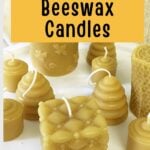
Beeswax candles have long been treasured for their natural beauty and long burn time. Learning how to make beeswax candles is a fun project for beginners and experienced crafters alike. From simple rolled candles to traditional hand-dipped tapers, there are several methods to try.
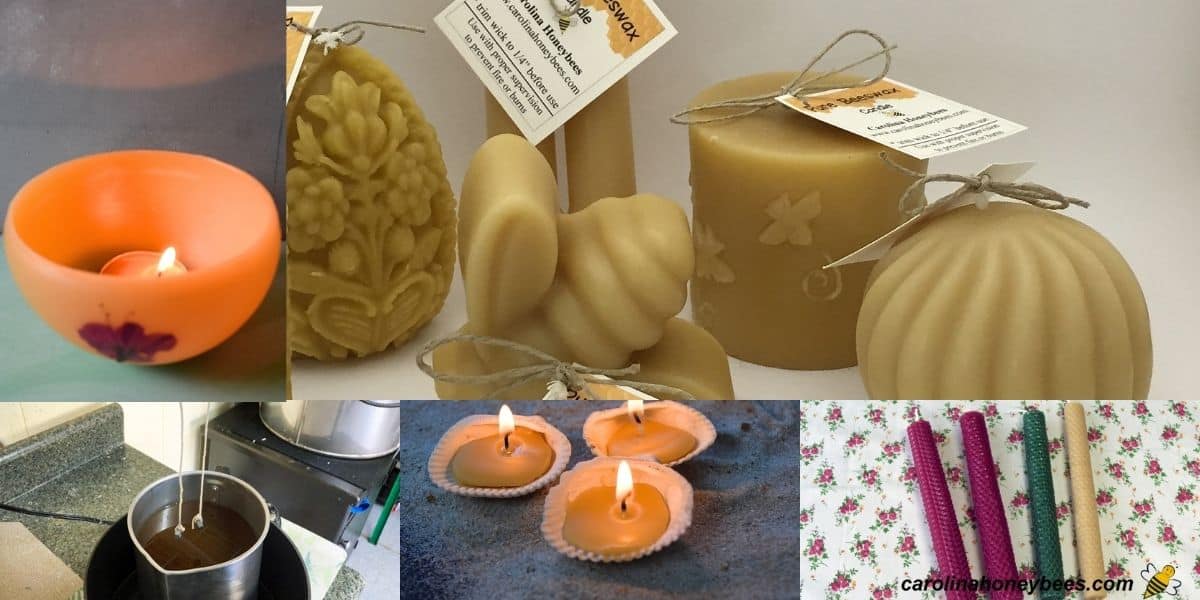
One of my favorite uses for beeswax is making candles and wax melts. Each candle-making method has its own advantages, and some are much easier than others. I’ll share the basics of working with beeswax and help you choose a project to try.
Why Make Candles with Beeswax?
There are several reasons to choose this natural wax for your candle projects. It has a beautiful golden color, a light honey scent, and a long burn time.
Made by honey bees, beeswax is a natural, renewable resource. It also has a higher melting point than many other candle waxes, making it a good choice for a variety of projects.
When you make your own candles, you have control over the quality and purity of the ingredients.
This is an important benefit of beeswax candles for those who prefer simple, natural materials in your home.
This post may contain affiliate links. Carolina Honeybees earns a tiny commission when you shop from our links. See our privacy policy for terms.
Basic Supplies for Making Beeswax Candles
Before you begin making candles, you need a few basic supplies. Some materials are needed for every project, while others depend on the type of candle you want to make.
- beeswax
- wick
- molds or containers (depending on method)
- fragrance (optional)
- color (optional)
Choosing Beeswax
There are several ways to acquire beeswax for your project. If you are a beekeeper, like me – you may have some wax left over from the honey harvest.
Or, you can purchase wax from a local beekeeper. If you use raw wax – be sure to clean your beeswax before using it for candles.
If you have a lot to clean – you can even render beeswax in a crockpot to get maximum cleaning.
Because natural beeswax color can vary a bit – it is best to have enough of the exact same shade. This is especially true if you are making pairs where you need each one to look the same.
Many local crafts stores sell beeswax in bars, pellets or pastilles. You can even buy wax online and it is a good idea to buy a little more than you expect to use. It never spoils- so no reason to not have some on hand.
Choosing the Right Candle Wick
Wick choice is an important factor in making beeswax candles. This natural wax burns differently than paraffin or soy, so choosing the correct wick size is important. An improperly sized wick can cause your candle to burn poorly or even go out.
I prefer braided cotton wicks for my candle projects. The size you need depends on the diameter of your finished candle and the type of wick you use.
Check the manufacturer’s recommendations and be prepared to experiment a little to find the best fit.
Before lighting your finished candle, trim the wick to about 1/4 inch.
Common Wick Sizes
The wick size is based on the diameter of your finished candle – how wide across they are. If you do not choose the correct wick size for beeswax, you will have trouble. This is the guide I use and I prefer braided cotton wick.
- 4/0 – is for a candle with a diameter less than 1″
- 2/0 – is for candles 1″ – 3″ in diameter
- #6 – is for candles larger than 3″ in diameter
Adding Scent
Pure beeswax has a light, natural honey scent that many people enjoy. For this reason, I rarely add extra fragrance to my candles.
However, if you prefer scented candles, you can experiment with fragrances specifically formulated for candle making.
Keep in mind that beeswax does not always hold added fragrance as well as some other candle waxes.
Adding fragrance can also affect how a candle burns, so be prepared to experiment a little to find the right combination.
This process is similar to when I make these scented wax tarts. Essential oils are also used in my herbal wax sachets. Scent is a very personal thing and it is hard to give a hard and fast rule on what and how much to use.
Coloring Beeswax Candles
Personally, I love the natural golden color and rarely feel the need to change it. However, you can add color to your candles using dyes specifically designed for candle making.
Keep in mind that adding too much dye may affect how your candle burns. If you want to experiment with different colors, start with a small amount and follow the manufacturer’s recommendations.
Candle wax coloring pigments are a fun way to experiment with color.
Equipment and Tools
For most candle-making projects, you will need a few basic tools. The exact equipment depends on the method you choose.
If you are melting beeswax, a double boiler or similar setup is the safest option (I love these little pots for small wax projects. A wax pouring pot is also handy for filling molds and containers.
Keep plenty of paper towels nearby and use parchment paper to protect your work surface. Trust me, a little preparation makes cleanup much easier!
Safety Precautions
Making beeswax candles is a fun and rewarding project, but working with hot wax requires care.
Always melt beeswax using a double boiler or another controlled, indirect heating method. Never place wax directly over a heat source, and don’t leave melting wax unattended.
Protect your work surface from spills and keep children and pets away from hot wax. Remember, melted beeswax can cause serious burns.
If you have any spills or drips (and sometimes you will), clean or remove beeswax from surfaces like countertops right away.
Once your candles are finished, follow basic candle safety practices. Always burn candles on a heat-resistant surface, away from flammable materials, and never leave a burning candle unattended.

Different Ways to Make Beeswax Candles
There is more than one way to make a candle using beeswax. Some methods are quick and easy, while others require a little more time and patience.
Whether you prefer rolling, dipping, or pouring melted wax into molds or containers, there is a project for almost everyone. Let’s look at some of the different methods you can try.
Rolled Beeswax Candles
One of the easiest ways to make candles is by using sheets of beeswax. These thin sheets of wax have a honeycomb pattern and are available in a variety of colors.
Simply place a wick along one edge and roll the wax tightly around it. No melting or pouring required! This is a great project for beginners and older children with adult supervision.
See my step-by-step tutorial on how to make rolled beeswax candles for complete instructions.
Of course there are several ways to make candles with beeswax sheets.
Molded Beeswax Candles
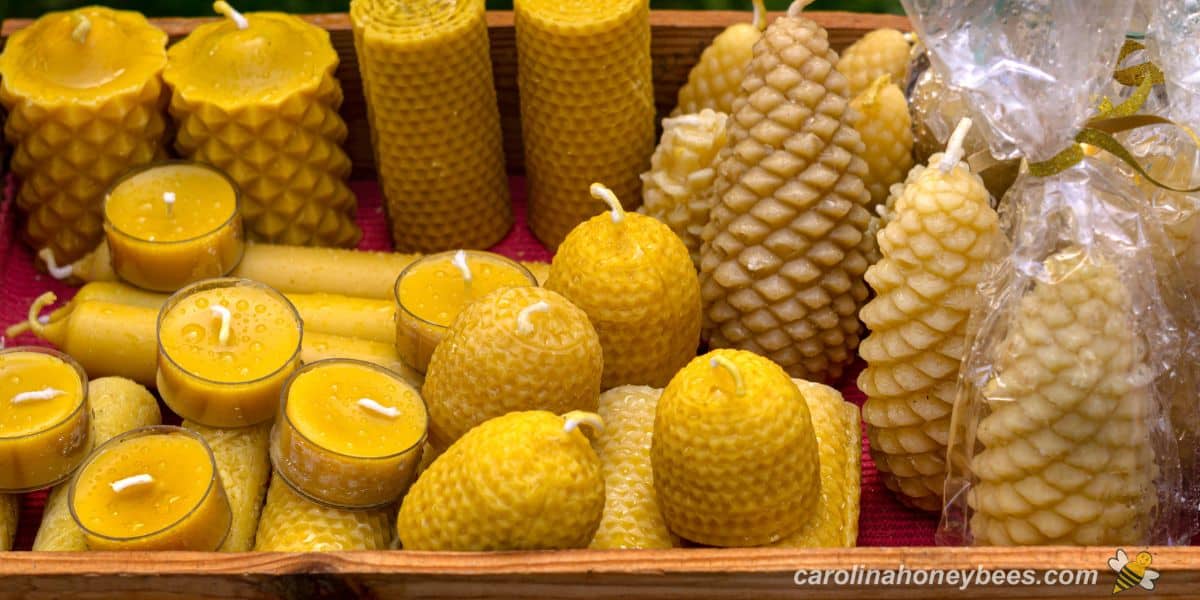
Using molds is one of my favorite ways to make beeswax candles. There are so many shapes and sizes to choose from, including simple pillars, decorative designs, and seasonal favorites.
Silicone molds are especially popular because they are flexible and make it easier to remove the finished candle. However, metal and plastic molds are also available.
This method involves melting the wax, securing the wick, and carefully pouring the melted beeswax into the prepared mold. Allow the candle to cool completely before removing it.
Not sure which type to use? My guide to beeswax candle molds explains the advantages and disadvantages of each type.
Hand-Dipped Beeswax Candles
Making hand-dipped candles is a traditional method that requires a little more time and patience. Instead of pouring melted wax into a mold, you repeatedly dip a wick into warm beeswax.
Each dip adds another thin layer of wax, gradually building the candle to the desired thickness. It takes a little practice, but the results are worth the effort.
If you want to give this old-fashioned method a try, see my tutorial on making dipped beeswax candles.
Beeswax Container Candles
Another popular method is pouring melted wax directly into a container. Small glass jars and other heat-resistant, candle-safe containers are popular choices for homemade candles.
Some container candle recipes combine beeswax with coconut oil to create a softer wax blend. This can help improve how the candle burns, depending on the wick and container size.
If you want to give this method a try, see my tutorial on making beeswax and coconut oil candles for complete instructions.
Creative Beeswax Candle Projects
Once you have tried a basic candle-making method, why not get a little creative? There are many fun ways to use beeswax to make decorative candles for your home, special occasions, or gifts.
Here are a few of my favorite projects:
- Beeswax Christmas Tree Candles – A festive project using sheets of beeswax to create decorative trees. This one takes a little more patience.
- Egg-Shaped Beeswax Candles – A fun project for spring or Easter using egg-shaped molds.
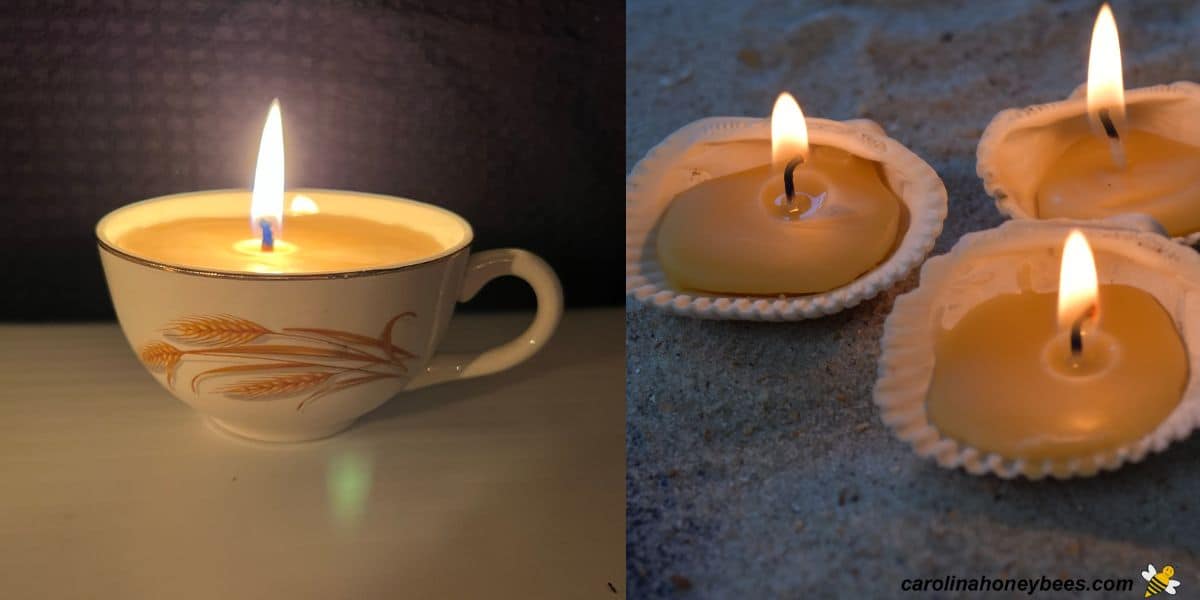
- Seashell Tealight Candles – Turn seashells into unique little candles with a coastal touch.
- Candles with Dried Flowers – Add a decorative touch to your candle projects using dried flowers.
- Citronella Candle Pots – A popular project for outdoor spaces.
- Teacup Candles – Give an old teacup new life with a charming homemade candle.
- Beeswax Lanterns or Luminaires – Not exactly candles, but a beautiful way to enjoy the warm glow of candlelight.
FAQs
Rolled beeswax candles are one of the easiest projects for beginners. They require only sheets of beeswax and candle wick. No melting or pouring is necessary.
The number of candles you can make with a pound of beeswax depends on candle size (weight). With 1 pound – 16oz net weight of wax – you could make 4 small 4oz candles or 1 big 16oz candle.
Braided cotton wicks are a popular choice, but the correct size depends on the candle’s diameter and design. Follow the wick manufacturer’s recommendations and test your finished candles for proper burning.
Final Thoughts
Making your own beeswax candles is a fun way to put this natural wax to good use. Whether you choose a simple rolled candle or a more challenging project, there are plenty of ways to get creative. Start with a method that interests you, and don’t be afraid to experiment a little. That’s part of the fun!
I’m pouring beeswax tapers in silicone molds and the newest beeswax I ‘m using is resulting in small bubbles trapped within the candle. Should I bee pouring hotter or solder to avoid those interior bubbles?
My thought is that you may be pouring too fast. When I melt wax for tapers, I only melt it just enough to be liquid and then pour slowly but consistently until the mold if full. It would not hurt to gently tap the side of the mold a couple of times to help bubbles rise – before the top skims over.
I am new to candle making. Is it necessary to prewax the cotton braided wicks for a beeswax container candle? I didn’t see any mention of it in your post. Thanks very much!
Is it necessary? No, I have made them without doing so and it worked fine. However, doing it – does seems to increase my success rate so I always try to remember to do it.
Pure beeswax candles should not burn quickly or drip. Are you sure the wax is pure? Is so, the problem is definitely the wick. I would try another size.
I have been using plastic molds for my tapered 100% beeswax tapered candles and they look great but they burn too quickly and drip a lot. I am using 100% organic braided cotton wicks (not pre waxed) 2mm in width and 1 mm thickness. What do I need to change? Thank you!
Can you use wood wicks in beeswax candles? And you don’t recommend pouring beeswax into glass containers?
I have some friends that have used wood wicks in beeswax with some success. It was trial and error to find the right size. Pouring beeswax into suitable glass containers can be ok. But , putting tealights or votives in small glass holders can be a problem.
Hello,
Thank you for such an informative article.
We are pouring beeswax into jar that is 14cm tall and 10 cm in diameter.
I bought 2mm hemp wicks and we use 4 of them but the problem is they still drown in the wax.
Do you have any recommendations on that?
I havent found any larger wicks than 2mm. Very thick one like a rope is releasing too much smoke and is difficult to burn from the first time.
Thank you!
Kind regards,
Anna
Beeswax burns so hot that I am not sure it is the best choice for larger candles. Unless you must use pure wax, this is a time where a candle blend might be a good idea.
I am having trouble with my candles cracking. I am using small jam jars and a mix of beeseax and coconut oil. I cool them slowly in a warm oven but they still crack. Any suggestions?
Cracking is not uncommon in poured beeswax candles unfortunately. Sounds like you do a good thing in cooling them slowly. I prefer pure beeswax (which is often too hot for glass) but I have friends who have had success with 75% Coconut Oil and 25% beeswax.
I have many old beeswax candles that I put on my Christmas tree and other decorative items. Is there a way I can clean them? They’re getting dirty. What should I use?
First, I would try to polish them with soft cloth. If that doesnt work and they are 100% beeswax, you could wash the in mild soapy water.
I am having trouble with wicks for my bees wax candles . They are not burning evenly? What would you suggest?
I would make sure that my wick size is appropriate for the size of the candle. Beeswax burns hotter than other types and needs a larger wick. The other issue would be to be sure your wax is very clean. Impurities in beeswax will cause sputtering and uneven burn.